Waterproof Shade Structures: HDPE Mesh vs PVC Membrane Guide
Facilities managers and procurement teams shopping for shade often assume any fabric canopy will keep foot traffic dry. It will not. Standard knitted shade cloth blocks UV rays but lets rain pass straight through, which is why waterproof shade structures are a distinct product category with different engineering, different fabric, and a different price point than sun-only shade. If your project involves a covered walkway, a dining patio that needs to stay open in light rain, or an entrance canopy that has to shed water away from a doorway, the material choice between HDPE mesh and PVC membrane will define whether the structure actually performs the way your building committee expects.
This guide breaks down what separates waterproof shade structures from ordinary shade sails, compares HDPE mesh and PVC membrane on the specs that matter, and walks through the compliance, drainage, and buying considerations commercial buyers need before signing off on a design. We will also cover where Custom Canopies’ in-house engineering and fabrication process fits into a waterproof project from first sketch to final installation.
What Makes a Structure Actually Waterproof
The term “shade structure” covers a wide range of products, and not all of them are built to keep water out. Most shade sails and knitted shade fabrics are intentionally porous, sometimes blocking 90 to 95 percent of UV while still allowing airflow and light rain to pass through the weave. That porosity is a feature for playgrounds and parking areas where heat buildup under a sealed canopy would be a problem. It is a liability for a walkway, loading dock, or dining patio where guests expect to stay dry.
True waterproof shade structures use a continuous, non-porous membrane instead of an open-weave fabric. Seams are heat-welded or sewn and sealed rather than left exposed, and the structure is engineered with slope, drainage points, or a valley gutter so water sheds to a controlled location instead of pooling on top of the fabric. Get any one of those details wrong and a “waterproof” structure will pond water, stretch the membrane, and eventually fail at the seams. This is why the material and the drainage engineering have to be specified together, not chosen separately.
HDPE Mesh vs PVC Membrane: Core Differences
Buyers researching waterproof shade structures usually land on two material families, and they are not interchangeable.
HDPE mesh (high-density polyethylene knitted fabric) is the workhorse of the shade sail industry. Standard HDPE mesh is engineered for airflow and UV blocking, not water resistance, and it is not the material you want for a true waterproof shade structure. However, manufacturers also produce a denser, tighter-knit HDPE option sometimes marketed as “water-resistant” mesh. It sheds light drizzle reasonably well because the tighter knit slows water passage, but it is not a sealed membrane and will not hold up as true waterproof shading in sustained rain. Facilities that need airflow more than full rain protection, such as open-air play areas in dry climates, are often better served by this category than by a fully sealed structure.
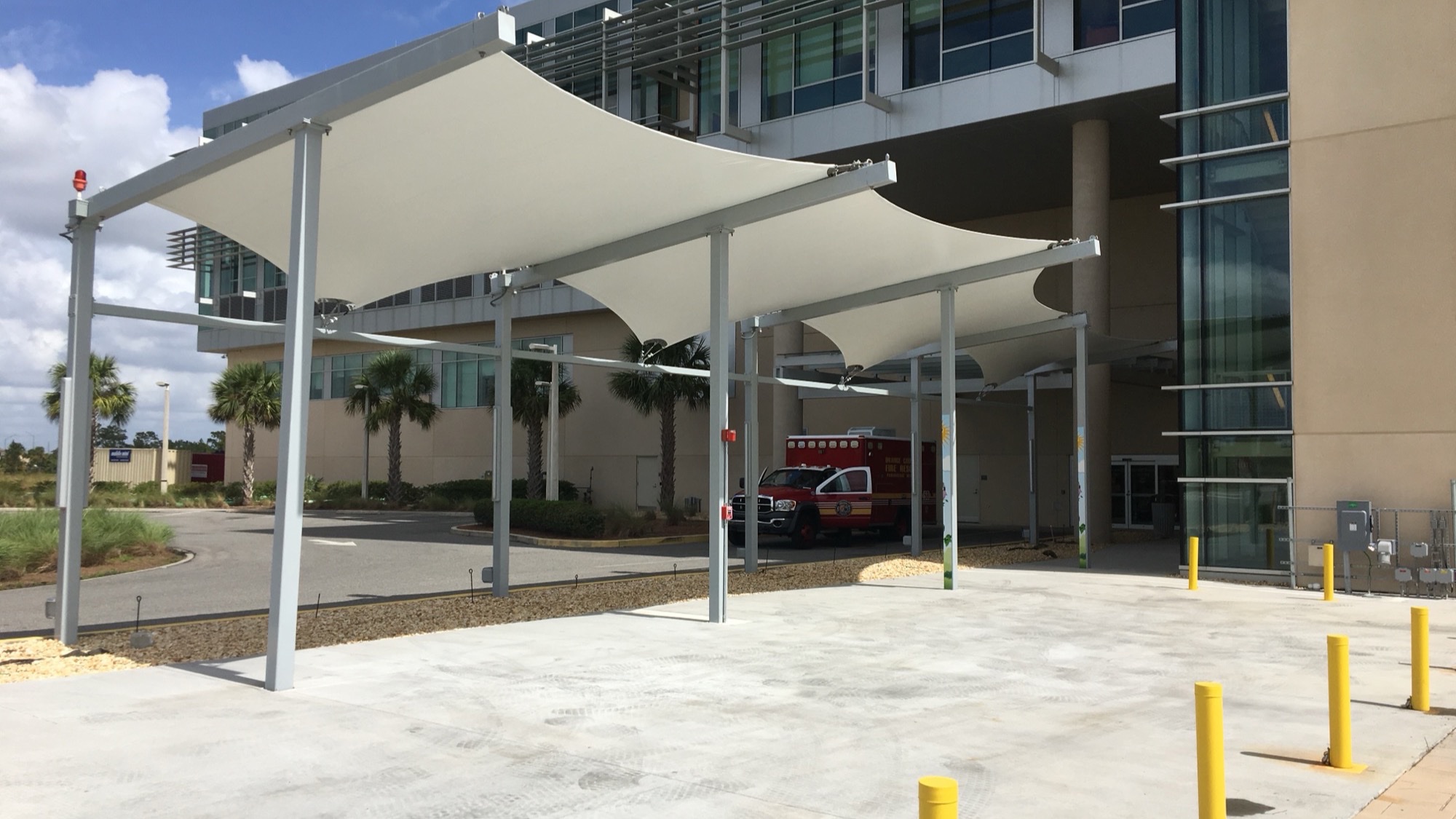
PVC membrane is the material actually built for waterproof performance. It is a polyester scrim coated on both sides with PVC (polyvinyl chloride), producing a continuous, non-porous sheet that sheds 100 percent of rainfall when installed with adequate pitch. PVC membrane is the standard choice for entrance canopies, covered walkways, loading docks, ambulance bays, and any application where “waterproof” has to mean waterproof, not “mostly dry.” The tradeoff is that a sealed membrane blocks airflow the way an open mesh does not, so a large PVC structure over a seating area can trap heat if it is not designed with enough clearance and, in some cases, ridge venting.
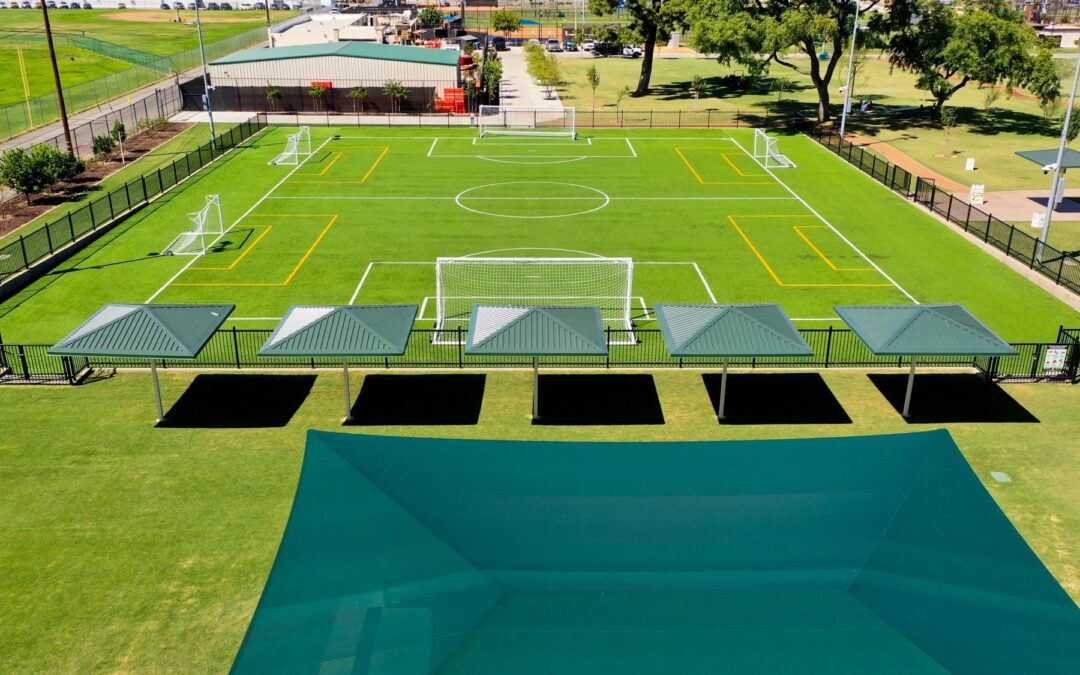
In practice, most commercial projects like this use PVC membrane for the sections that must shed rain (entries, walkways, dining areas that stay open in wet weather) and pair them with open HDPE shade sails over adjacent areas where airflow and UV blocking matter more than rain protection. Mixing the two is common on larger campuses and is worth discussing with your design team before you commit to one material across an entire site.
Rain Protection vs Airflow: How to Decide
The single most important question in specifying waterproof shade structures is whether the space underneath needs to function in the rain, or whether it just needs shade with occasional weather tolerance. These are different design problems.
Choose PVC membrane waterproof shade structures when the covered area is a functional path or gathering space that has to stay usable during rain: entrances, ambulance and emergency vehicle bays, covered walkways between buildings, ticketing and queuing areas, loading docks, and restaurant patios that generate revenue on rainy days. In these cases, foot traffic and operations cannot pause because of weather, and a porous shade sail simply will not meet the brief.
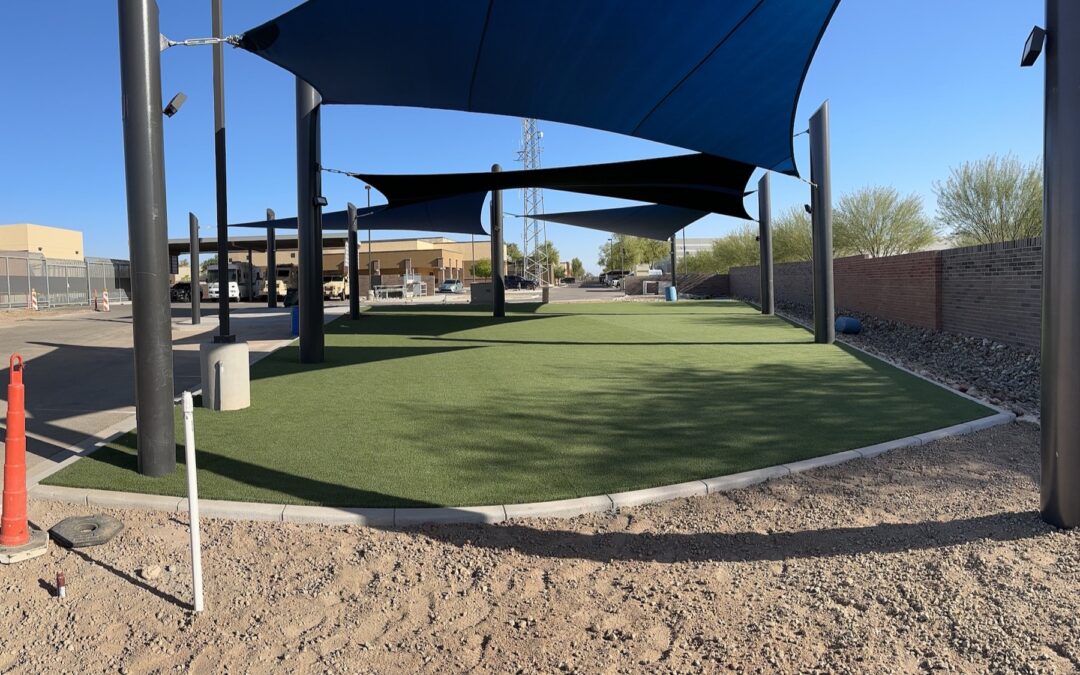
Choose open HDPE mesh when heat management matters more than rain: playgrounds, parking lots, bleacher seating, and dog parks are all better served by airflow than by a sealed membrane, because trapped heat under a non-vented waterproof canopy can make a space less comfortable on a hot, dry day even though it stays dry on a wet one. Climate matters here too. In consistently dry regions, procurement teams sometimes over-specify waterproof shade structures when a standard shade sail would perform just as well at a lower cost and with better ventilation. In regions with real seasonal rainfall, or for any application involving a building entrance, a sealed PVC membrane is worth the investment.
A short internal audit helps: walk the site and ask which covered areas are used for movement and operations (choose waterproof) versus which are used for lingering and recreation in good weather (open mesh is usually fine, and often more comfortable).
Wind Engineering, Drainage, and Safety Compliance
A sealed PVC membrane catches wind the way an open mesh sail never will. Where an HDPE shade sail lets wind pass through its weave, a waterproof shade structure presents a solid surface to every gust, which means the posts, footings, and membrane tensioning all have to be engineered for higher wind loads than an equivalent-size mesh sail. This is not optional detail work. Undersized footings or under-rated posts on a sealed structure are a documented cause of shade structure failures during storm events, and it is the reason wind engineering standards published by industry bodies like the American Society of Civil Engineers exist and are referenced in most municipal and state building codes.
Drainage is the second engineering problem unique to waterproof shade structures. A flat or minimally pitched membrane will pond water, and standing water on a tensioned fabric surface adds dead load the structure was not designed to carry, which can stress seams and framing over time. Properly engineered structures use one of a few drainage strategies: a single-slope pitch that sheds to one edge, a valley or gutter design between two peaks, or an internal drain and downspout system built into the frame. Ask any manufacturer bidding on a waterproof structure how the design handles a sustained downpour, not just a light rain, and ask to see the drainage detail on the engineering drawings before you sign off.
For public-facing waterproof shade structures, accessibility also has to be part of the design. Covered walkways and entrance canopies frequently sit along accessible routes, and clearances, surface slopes, and structural post placement should be coordinated with ADA guidance so the shade structure does not create an obstruction. Building committees at schools, hospitals, and municipal sites should confirm this review happens during design, not after installation.
Materials and Specs Worth Asking About
Not all PVC membrane is the same, and the spec sheet matters more than the marketing copy when you are comparing bids for a waterproof shade structure. A few line items worth requesting from any manufacturer:
- Fabric weight and coating thickness, typically measured in ounces per square yard, which affects durability and puncture resistance.
- UV stabilizer content, since PVC membranes without adequate stabilizers can become brittle and discolor well before the structure’s expected service life.
- Fire rating, commonly NFPA 701, which many municipal and school projects require regardless of material.
- Seam construction: heat-welded seams generally outperform sewn-and-sealed seams for long-term water resistance on a waterproof shade structure.
- Frame material and coating: powder-coated steel or aluminum framing resists corrosion far better than uncoated or painted steel, particularly in coastal or pool environments.
If a bid does not specify these details, ask for them in writing before comparing price. Two quotes that look similar on the cover page can represent very different fabric quality once you get into the coating weight and seam type.
Installation Timeline and Site Prep
Installation for a waterproof shade structure typically takes longer than an equivalent open mesh sail, and building that lead time into a project schedule avoids surprises. Footing depth and diameter are larger to handle the added wind load, which usually means core-drilling or excavation sized to the engineering drawings rather than a standard post hole. On occupied sites such as hospitals, schools in session, or active restaurant patios, installation crews often need to phase work around operating hours, which can extend a straightforward install from a few days to one or two weeks depending on site access.
Site prep questions worth resolving before crews arrive: where do underground utilities run relative to the footing plan, is the surface concrete, asphalt, or soil, and does the drainage design tie into existing stormwater infrastructure or does it need its own runoff path. A manufacturer that handles engineering and fabrication in-house can usually answer these questions during drafting rather than discovering a conflict on install day, which is one of the more overlooked advantages of working with a single vendor for the full project instead of separating design from installation.
How Custom Canopies Builds Waterproof Shade Structures
Custom Canopies Inc. is a family-owned, made-in-America manufacturer, and every waterproof shade structure we produce moves through the same six-step, in-house process: Consultation, Drafting, Manufacturing, Coating, Shipping, and Installation. Because engineering, fabrication, and powder coating all happen in-house rather than through subcontractors, drainage details, wind load calculations, and frame coating are handled by the same team from the first site consultation through final install, with custom sizing to the nearest inch rather than a fixed catalog dimension.
During the consultation and drafting phase, our team reviews site-specific wind exposure, drainage points, and whether the project calls for PVC membrane, water-resistant HDPE mesh, or a mixed approach across different areas of a campus. See our commercial design process for how that consultation works before a single post goes into the ground. Every structure we build carries Contractors License #880322 and Fabricators License #FB00073, and we ship and install nationally, not just in our home region.
Facility-Type Breakdown: Where Waterproof Shade Structures Fit
Hospitals and healthcare campuses. Ambulance bays, main entrances, and drop-off zones need waterproof shade structures more than almost any other facility type, since emergency access cannot pause for weather. Membrane structures over these zones are typically engineered with steel or aluminum framing rated for continuous, high-traffic use.
Schools and districts. Covered walkways between buildings are one of the most common requests from school districts, particularly in regions with a wet season. These projects often run through California’s DSA review process; see our guide on DSA-approved canopies for how that approval track works alongside a waterproof design.
Restaurants and hospitality. Patio revenue drops fast in wet weather, and a waterproof shade structure over dining space keeps tables usable on rainy days instead of losing the seating entirely. Many hospitality clients pair a sealed membrane section with open umbrellas at the edges for a mix of coverage types across one patio.
Hotels and HOAs with pool decks. Chlorine exposure is hard on both PVC membrane and metal framing, so pool-adjacent waterproof shade structures need corrosion-resistant coating specs. Our guide to pool shade structures for hotels and HOAs covers the material considerations specific to chlorine environments in more depth.
Parks and municipal sites. Waterproof shade structures over picnic pavilions and gathering areas get heavy public use and need to hold up to vandalism as well as weather. See our breakdown of shade structures for parks and municipalities for how capital budgets and vandal-resistant design intersect with material choice.
Common Buying Mistakes with Waterproof Shade Structures
The most frequent mistake procurement teams make is treating “shade structure” as a single product category and assuming any bid covers waterproofing by default. Standard shade sail bids almost never include the drainage engineering, higher wind load rating, or sealed membrane fabric that a true waterproof shade structure requires, so an apples-to-apples price comparison across bids has to start with confirming every vendor is quoting the same material and drainage approach.
A second common error is under-engineering the frame for the added wind load a sealed membrane creates, either to hit a lower price point or because the bidding contractor is not doing in-house structural engineering. A third is skipping the site-specific drainage plan and assuming a flat or minimally pitched design will be fine, which leads to ponding, membrane stress, and premature failure. Finally, some buyers select PVC membrane everywhere on a site by default without considering whether an open HDPE mesh sail would actually be more comfortable, and less expensive, for areas where rain protection is not the primary need.
What Drives the Cost of Waterproof Shade Structures
Waterproof shade structures generally cost more than standard shade sails of the same footprint, and several factors drive that difference: heavier-gauge PVC membrane fabric, upgraded wind-rated framing and footings, engineered drainage systems, and in many cases more complex installation logistics for larger spans. Pricing varies widely by region, site conditions, and structural engineering requirements, so industry-typical ranges are only useful as rough market context rather than a number to budget against. The most reliable way to get an accurate figure is a site-specific quote that accounts for your footprint, local wind and building code requirements, and drainage needs. You can request one through our contact page.
Frequently Asked Questions
Are all shade sails waterproof?
No. Standard HDPE shade sails and mesh fabrics are designed to block UV and allow airflow, and most are intentionally porous so rain passes through. Only sealed PVC membrane, or specialty water-resistant HDPE mesh, is built to shed rain, and even then only true PVC membrane is fully waterproof.
What is the main difference between HDPE mesh and PVC membrane?
HDPE mesh is a knitted, open-weave fabric built for UV blocking and airflow. PVC membrane is a continuous, non-porous coated fabric built to shed water completely. HDPE mesh is generally lighter and less expensive; PVC membrane requires more structural engineering because it catches wind like a solid surface.
Do waterproof shade structures need special engineering?
Yes. Because a sealed membrane presents a solid surface to wind, waterproof shade structures require higher-rated framing, footings, and tensioning than an open mesh sail of the same size, along with a drainage plan to prevent water from pooling on the fabric.
Can I mix HDPE mesh and PVC membrane on the same site?
Yes, and it is common. Many campuses use sealed PVC membrane over entrances, walkways, and other functional areas that need to stay dry, paired with open HDPE mesh over recreational or parking areas where airflow matters more than rain protection.
How long do waterproof shade structures last?
Service life depends on fabric quality, UV stabilizer content, frame coating, and climate exposure. Powder-coated steel or aluminum framing paired with a properly specified, heat-welded PVC membrane will substantially outlast a lower-grade coated fabric on an uncoated frame, particularly in coastal or high-UV regions.
Do waterproof shade structures need to meet ADA requirements?
When a waterproof shade structure covers an accessible route, entrance, or seating area, clearances and post placement need to be coordinated with ADA accessibility guidelines so the structure does not obstruct the path of travel. This should be addressed during design, not after installation.
Are waterproof shade structures more expensive than standard shade sails?
Generally yes, because of heavier fabric, upgraded wind-rated framing, and engineered drainage. The exact difference depends on footprint, local code requirements, and site conditions, which is why a site-specific quote is the most accurate way to compare costs.
Can existing shade sails be retrofitted with a waterproof membrane?
Usually not without re-engineering. Because a sealed PVC membrane changes the wind load on the structure, existing posts and footings sized for an open mesh sail are typically undersized for a waterproof retrofit, and the frame usually needs to be re-engineered rather than simply re-covered.
Get a Site-Specific Quote for Waterproof Shade Structures
Choosing between HDPE mesh and PVC membrane comes down to what the covered space actually needs to do: move people and operate through rain, or provide comfortable UV protection with airflow on dry days. Custom Canopies engineers, fabricates, and powder coats every waterproof shade structure in-house, with custom sizing to the nearest inch and installation anywhere in the United States. If you are weighing material options for an entrance, walkway, patio, or pavilion, our team can walk your site plan and recommend the right approach before you commit to a design.
Call (562) 464-4646 or visit our contact page to start a site-specific quote for your waterproof shade structure project. You can also browse common questions on our FAQ page before reaching out.
Free Project Quote
What type of project is this?
Tell us where the shade structure is going and a specialist will design around your site.
Free Project Quote
Tell us about your project
A sentence or two is plenty. Size, location, and timeline help us quote faster.
Free Project Quote
Where should we send your quote?
A shade specialist will review your project and reach out within 1 business day.
Thanks! We’ll be in touch shortly.
A shade specialist will review your project and reach out within 1 business day. Prefer to talk now? Call (562) 464-4646.