Shade Structures for RV Parks and Campgrounds: An Owner’s Guide
Shade structures for RV parks and campgrounds have moved from a nice-to-have amenity to a competitive necessity. Guests booking a site today compare photos before they compare price, and an unshaded gravel pad next to a shaded one with a picnic table underneath loses that comparison every time. For park owners and operators, the question is no longer whether to invest in shade, but where to put it, what it should be built from, and how to budget a phased rollout across a property that may include pull-through RV rows, a pool deck, a pavilion, a playground, and a dog park, all with different structural and compliance needs.
This guide walks through what shade structures for RV parks and campgrounds actually cover, why they matter commercially, the engineering and compliance questions that come up most often, the materials and structure types worth comparing, and the buying mistakes that cost operators money. It is written for owners, general managers, and facilities staff evaluating a shade investment across an active, revenue-generating property, not a backyard patio project.
What Shade Structures for RV Parks and Campgrounds Cover
“Shade structures for RV parks and campgrounds” is a broad category that spans several very different use cases on the same property. Understanding the distinction matters because each one has its own footing plan, clearance requirements, and budget tier.
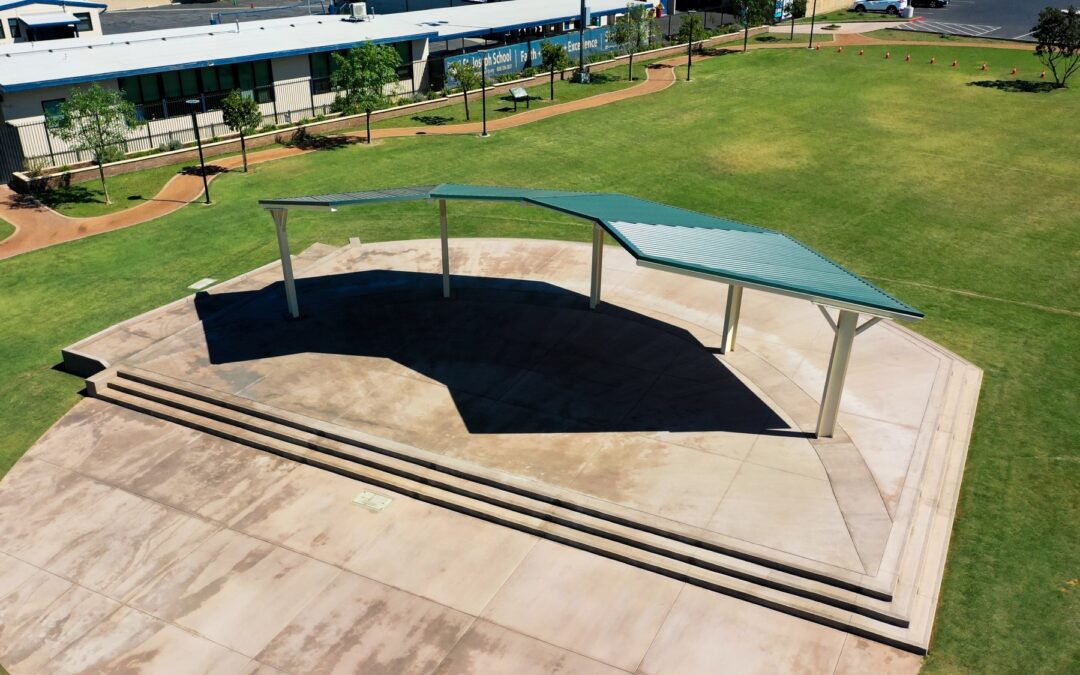
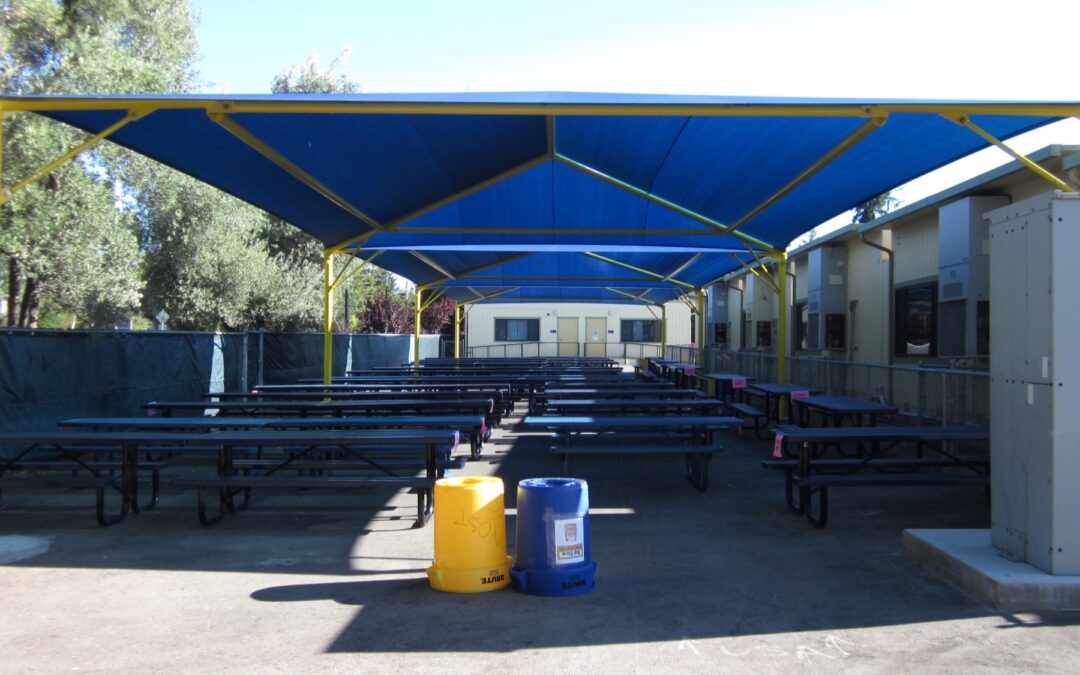
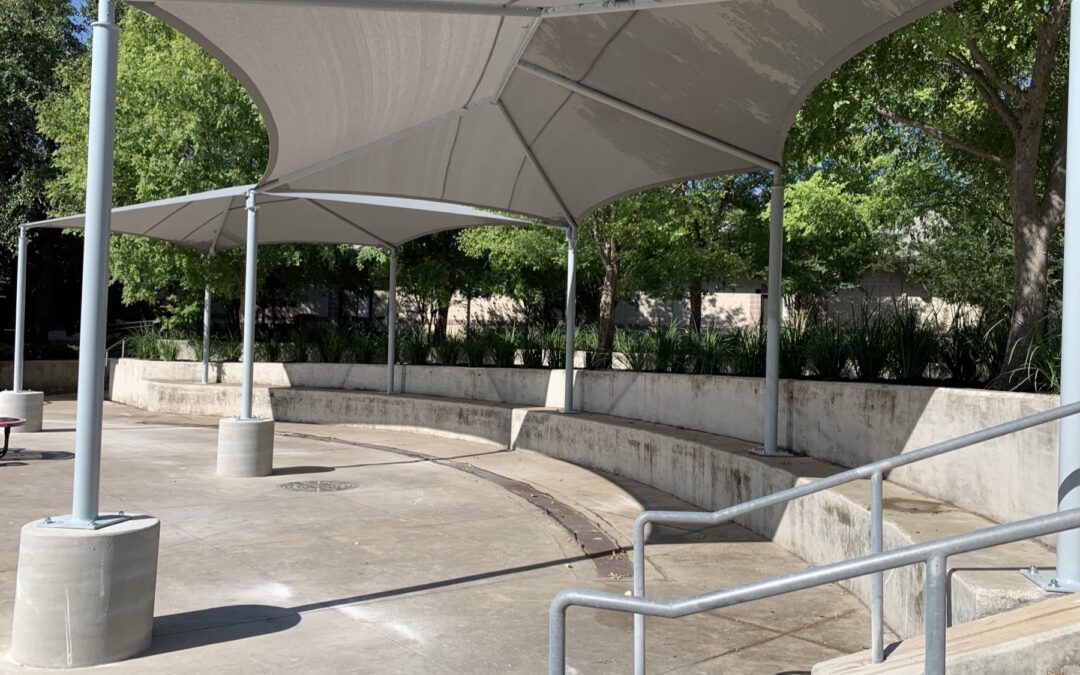
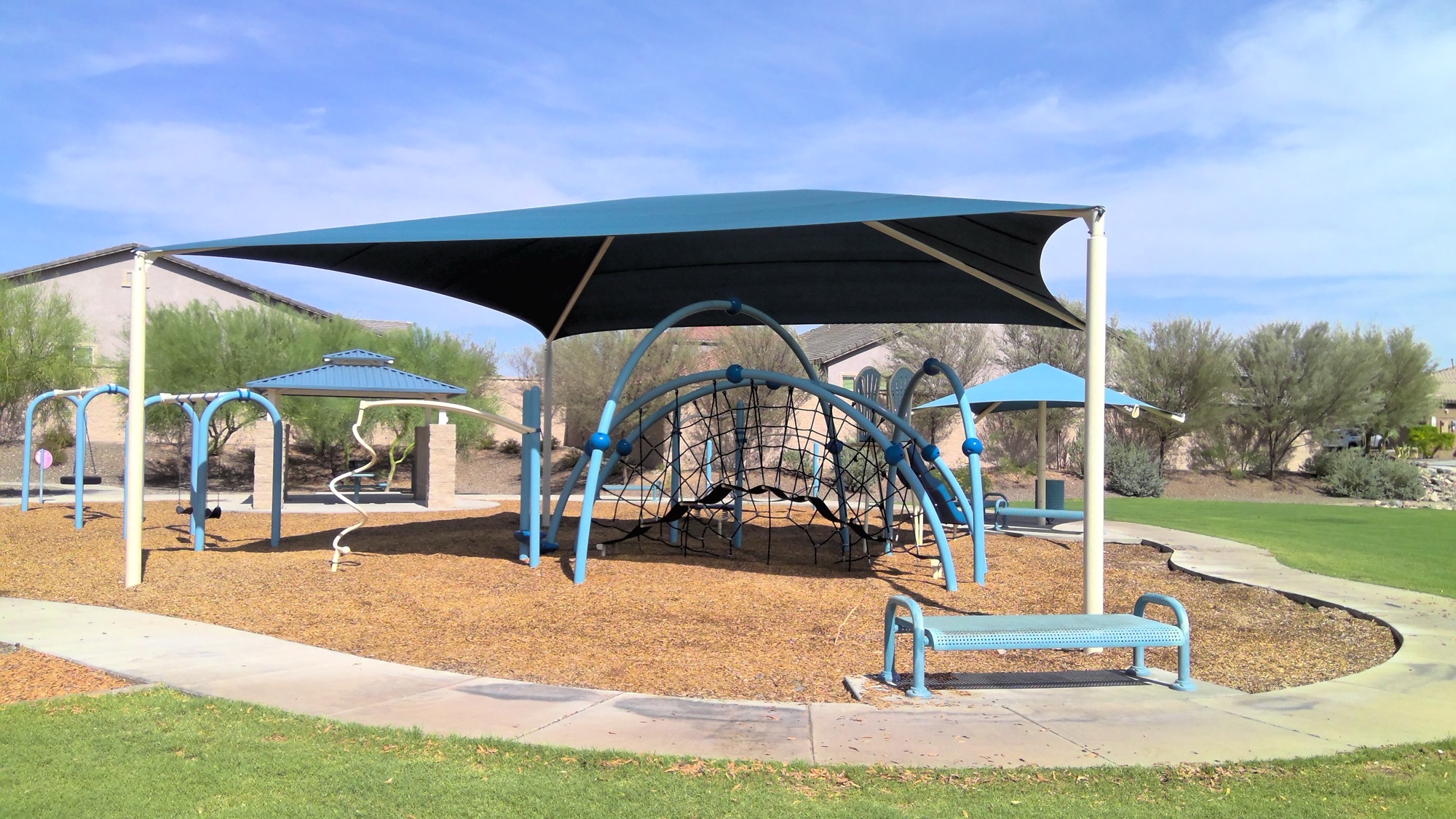
Common area shade covers the pool deck, pavilion, clubhouse patio, playground, and dog park. These structures are about guest dwell time and comfort. They are typically steel-frame canopies or shade sails sized to a specific seating, play, or gathering zone, and they are the easiest place to start a phased shade plan because the footprint and foundation work are predictable.
Covered RV site shade is a different animal. These structures span a full-size motorhome or fifth-wheel bay, often 12 to 16 feet of clear height and 40 feet or more in length, and they double as a premium upsell that parks can price at a nightly or monthly premium. Covered sites also have to account for slide-outs, awnings already in use, and sightlines for guests backing in a large rig, which changes column placement compared to a standard parking canopy.
A well-planned shade program treats these as two separate line items with two separate layouts, even when they are installed in the same project. Our commercial design process maps both zones before any steel is ordered.
Why Shade Is a Revenue and Retention Driver for RV Parks and Campgrounds
The commercial case for shade structures at RV parks and campgrounds is straightforward once it’s broken into the numbers that matter to an operator.
Covered RV sites command a premium. Parks that have rolled out covered pads report guests booking them first and staying longer, because shade cuts interior cooling load on the rig itself, protects awnings and roof seals from UV breakdown, and keeps the exterior finish from fading as fast. For an operator, that premium can offset the structure’s cost well inside its service life, and the structure still protects the asphalt, concrete, or gravel pad underneath it from heat cracking and weed intrusion.
Common area shade drives a different metric: occupancy of the amenities themselves. A pool deck or playground that is unusable from late morning to early evening during peak season is an amenity guests paid for but can’t use. Covering it extends the usable hours of the space, which shows up directly in guest satisfaction scores and repeat bookings. Dog parks, in particular, see a sharp drop in midday use without shade, which matters at parks that market pet-friendly stays as a differentiator.
There is also an equipment-protection case that is easy to underweight. Office trailers, maintenance equipment, golf carts, and laundry facility exteriors all benefit from reduced solar load, which lowers HVAC run time and extends paint and roofing life. Shade structures for RV parks and campgrounds are, in this sense, a facilities investment as much as a hospitality one.
Shoulder-season bookings are another place the revenue case shows up. A park in a hot-summer region often sees demand drop off in the weeks before and after peak season specifically because midday heat makes the uncovered sites and common areas unpleasant. Operators who have covered their premium rows and pool deck report that those shoulder weeks hold occupancy better than the uncovered inventory does, which effectively lengthens the park’s high-revenue season without any change to rates.
Wind Engineering, ADA and Safety Compliance for Campground Shade Structures
Campground and RV park shade structures are frequently sited in open, exposed terrain, along rivers, in desert basins, on coastal bluffs, which means wind load is usually the governing design factor rather than an afterthought. A structure spec’d for a suburban parking lot is not automatically adequate for a campground on an open floodplain or a coastal RV resort. Engineered shade structures carry stamped drawings sized to the local wind zone, exposure category, and soil conditions, and those drawings are what a county building department will ask for during permitting. ASTM International publishes the wind-design standards that structural engineers reference when sizing footings and frame members for exposed outdoor structures, and asking a vendor whether their canopies are engineered to current ASTM and local code wind speeds is a fair, specific question to put in a request for proposal.
ADA accessibility applies to any common area shade structure serving guests, including pool decks, pavilions, and clubhouse patios. Clear floor space, accessible routes under and around the structure, and column placement that doesn’t narrow a path of travel below the required width all need to be checked against ADA.gov guidance during design, not after the concrete is poured. Covered RV sites themselves aren’t typically subject to the same accessible-route requirements as common areas, but any accessible site a park designates for guests with mobility needs should be shaded and routed the same way an accessible parking space would be.
Fire and utility clearances matter too, especially around covered sites where guests run awnings, slide-outs, and sometimes portable generators close to the structure. A good design pass checks clearance to the rig itself, not just the pad dimensions, and coordinates any lighting or power tie-ins at the structure with the park’s electrical plan rather than running conduit as an afterthought.
Engineered Steel-Frame Canopies vs. Metal Carports for RV Sites
Owners shopping covered RV site shade almost always end up comparing two paths: a stock metal carport kit, or an engineered steel-frame canopy custom-sized to the site.
Metal carport kits are inexpensive and fast to source, but they are built to generic span and snow/wind tables, not to the specific exposure of a given property. On an open campground site, that gap shows up as under-engineered footings, panel uplift in gusts, and a structure that looks like a storage-unit rooftop rather than a resort amenity. Kits also rarely account for RV-specific clearances like slide-out swing or awning height, so guests end up backing in carefully to avoid contact.
Engineered steel-frame canopies are designed to the site: clear height set to the tallest class of rig the park accepts, column spacing that keeps sightlines open for a guest backing a 35-foot fifth-wheel, and a frame and footing sized with stamped drawings to the property’s actual wind exposure. They cost more per site than a carport kit, but they hold up to the same storms that bend carport panels, and a uniform row of engineered canopies reads as a managed resort amenity rather than a storage lot, which matters for the marketing photos that sell the premium sites in the first place.
For parks phasing a rollout, it’s common to engineer one canopy design for the full covered-site program and build it out in stages as budget allows, rather than mixing carport kits and engineered canopies on the same row. Our cantilever canopy designs are a common fit for RV rows specifically because a cantilever keeps columns off the edge of the drive aisle, which solves the backing-in sightline problem that post-in-ground kits create.
Materials, Fabric and Finish Options for RV Park Shade Structures
Material selection for shade structures at RV parks and campgrounds depends heavily on exposure and on what each structure is protecting.
For covered RV sites and pavilions, operators generally choose between HDPE knitted shade fabric and waterproof PVC membrane. HDPE blocks 90 percent or more of UV depending on fabric weight and breathes enough to prevent the heat buildup you get under a solid roof, which is a real consideration for a structure sitting directly over a rig’s roof and air conditioning units all day. Waterproof PVC membrane sheds rain entirely, which matters more at a pavilion or clubhouse patio where guests are actively gathered underneath during a passing shower, or at a covered site in a wetter climate where keeping an awning and slide-out dry is part of the pitch. Our waterproof shade structure options cover both HDPE mesh and PVC membrane builds depending on the site.
Frame finish matters more at a campground than most commercial settings because the structures sit in continuous weather exposure, often near water, sand, or irrigation overspray. Powder-coated steel resists the corrosion that bare or painted steel picks up fast in those conditions, and it holds color through sun exposure better than most alternatives, which keeps a multi-year covered-site rollout looking consistent as phases are added. Heavier-gauge steel tubing is worth specifying for exposed coastal or high-wind inland sites even where it adds modest cost, since the frame is the part of the structure that is genuinely expensive to replace after a storm.
Fabric and frame color are worth planning deliberately rather than defaulting to whatever a vendor has in stock. Many parks match canopy color to a brand palette across the pool deck, pavilion, and covered-site rows so the property reads as a cohesive resort in marketing photos instead of a patchwork of mismatched structures added over several years. Darker fabric colors absorb more heat and fade faster under sustained UV than lighter tones, which is a practical reason to weigh color against climate, not just branding.
Custom Canopies’ In-House 6-Step Process for RV Park Shade Structures
Custom Canopies Inc. runs every RV park and campground shade project through the same in-house process, from first site walk to final install, rather than brokering out design or fabrication to subcontractors.
- Consultation. We walk the site with the owner or operator, review which zones are common-area shade versus covered RV sites, and talk through guest flow, rig sizes the park accepts, and existing pad or utility conditions.
- Drafting. Our in-house engineering team drafts structures custom sized to the nearest inch for each zone, with wind-load calculations run to the property’s actual exposure and stamped drawings prepared for permitting.
- Manufacturing. Steel is fabricated in our own shop under our Fabricators License, not farmed out, which keeps tolerances tight across a multi-site rollout so every canopy in a row matches.
- Coating. Frames go through in-house powder coating for corrosion resistance and consistent, long-lasting color across the property.
- Shipping. We ship nationally, so a campground or RV resort anywhere in the country works with the same manufacturer and the same engineering team from start to finish.
- Installation. Our crews install on-site, coordinating around park operations so covered-site rows go up without shutting down bookings any longer than necessary.
Because every step happens in-house under one Contractors License, an owner managing a phased rollout works with one point of contact across design, fabrication, and install instead of coordinating separate vendors for drafting, steel, coating, and installation.
Facility-Type Breakdown: What Different RV Parks and Campgrounds Need
Shade priorities shift depending on the type of property.
Destination RV resorts with daily and weekly guests tend to prioritize covered premium sites first, since those sites carry a rate premium that pays the structure back fastest, followed by pool deck and clubhouse patio shade that shows up in marketing photos.
Long-term and seasonal parks with monthly residents often see more value in common-area shade: a pavilion for community events, a shaded dog park, and playground shade, since long-term guests already have personal awnings on their rigs and weigh amenity quality more than per-night upgrades.
Public and municipal campgrounds operated by a parks department or forest concessionaire usually run shade decisions through a capital budgeting and procurement process similar to other municipal park amenities, with more emphasis on vandal-resistant hardware and durable, low-maintenance materials than on premium upsell pricing. Our park and municipal shade structures guide covers the procurement side of that process in more depth.
Overflow and gravel-lot parking for day-use visitors or event parking at a campground property shares more in common with standard commercial parking lot shade than with guest-site shade; our commercial parking lot shade structures guide is the better starting point for that zone specifically.
Buying Mistakes That Cost RV Park Operators Money
A few mistakes show up repeatedly in RV park and campground shade projects, and most of them are avoidable with better upfront planning.
Sizing clearance to the park’s current fleet instead of the tallest rig it will accept. A 12-foot clear height works until a guest with a 13-foot Class A tries to back into a covered site. Design to the maximum rig height the park will realistically host, not the average.
Choosing a carport kit for an exposed site to save upfront cost. As covered above, generic kits are rarely engineered for open campground wind exposure, and a failed structure after a storm costs far more than the difference would have.
Ignoring slide-out and awning clearance. Column placement that looks fine on a drawing can clip a slide-out or awning in practice. Field-verify clearances against actual rig dimensions, not just pad width.
Treating common-area and covered-site shade as one undifferentiated purchase. They have different structural requirements, different ROI timelines, and often different budget sources (capital improvement versus guest-amenity budget), and planning them separately produces a better outcome for both.
Skipping engineered drawings to speed up permitting. Most counties require stamped structural drawings for permanent shade structures regardless of size, and skipping that step up front is the single most common cause of project delays once a permit application is actually filed.
Letting install timing collide with peak occupancy. Installing covered-site structures row by row during a park’s busiest booked weeks creates avoidable guest friction and lost site-nights. Scheduling installation in shoulder-season windows, and sequencing it row by row rather than closing the whole RV section at once, keeps the park operating through the build-out.
What Drives the Cost of RV Park and Campground Shade Structures
Pricing for shade structures at RV parks and campgrounds varies by span, clear height, wind engineering requirements, material choice, and site conditions, so industry-typical ranges are only useful as rough market context, not a quote. In general, larger clear spans, taller clear heights for tall rigs, high-wind engineering, and waterproof PVC membrane all push cost up relative to a standard common-area canopy on HDPE fabric. Site work, foundation conditions, and whether existing pads need modification also factor in. Because every property’s exposure, rig mix, and rollout phasing is different, the most useful next step is a site-specific quote rather than a generic price range. You can request one through our contact page.
Frequently Asked Questions
Do RV parks need engineered shade structures, or will a standard carport work?
Open campground and RV resort sites are typically more exposed to wind than a suburban lot, so an engineered structure with stamped drawings sized to the property’s actual wind exposure is the safer choice, even though a generic carport kit costs less upfront.
How much clear height do covered RV sites need?
Most covered RV site canopies are built with 12 to 16 feet of clear height to accommodate Class A motorhomes and tall fifth-wheels with roof-mounted air conditioning units, but the right number depends on the tallest rig class the park plans to accept.
Should covered RV sites use HDPE mesh or waterproof PVC membrane?
HDPE mesh blocks most UV while allowing heat to vent, which suits dry, hot climates, while waterproof PVC membrane also sheds rain, which matters more in wetter regions or at pavilions where guests gather during weather.
Do pool deck and playground shade structures need to meet ADA requirements?
Yes. Any common-area shade structure serving guests needs to preserve accessible routes and clear floor space, which should be checked during design against current ADA.gov guidance, not added after installation.
Can a shade structure rollout be phased across a property instead of built all at once?
Yes, and it’s common. Many parks engineer one canopy design for the full covered-site and common-area program, then build it out in phases as capital budget allows, which keeps the look consistent across the property.
Do shade structures help protect RVs themselves, not just guests?
Yes. Shade reduces UV exposure on roof membranes, awnings, and exterior finishes, and it lowers the cooling load inside the rig, which is part of why covered sites are able to command a rate premium over uncovered ones.
What’s the difference between shading a dog park and shading a playground at a campground?
Both benefit from extending usable hours during peak heat, but playground shade layouts also need to account for CPSC use-zone and equipment clearance guidance, while dog park shade is more about covering gathering and seating areas without obstructing the fenced run itself.
Get a Site-Specific Quote for Your RV Park or Campground
Whether you’re planning a full covered-site rollout, shading a pool deck and pavilion, or phasing a shade program across an entire property, Custom Canopies Inc. handles design, in-house fabrication, powder coating, shipping, and installation under one roof, with service anywhere in the US. Call us at (562) 464-4646 or visit our contact page to start a site-specific quote for shade structures at your RV park or campground.
Free Project Quote
What type of project is this?
Tell us where the shade structure is going and a specialist will design around your site.
Free Project Quote
Tell us about your project
A sentence or two is plenty. Size, location, and timeline help us quote faster.
Free Project Quote
Where should we send your quote?
A shade specialist will review your project and reach out within 1 business day.
Thanks! We’ll be in touch shortly.
A shade specialist will review your project and reach out within 1 business day. Prefer to talk now? Call (562) 464-4646.