Police Fleet Parking Canopies: A Commercial Buyer’s Guide
Police fleet parking canopies are steel-engineered shade structures built to protect patrol vehicles, lightbars, in-car electronics, and K9 transport units from sun, heat, and weather exposure. For police departments, sheriff’s offices, and municipal fleet managers, an unshaded lot is not just a comfort issue. It is an equipment-lifespan issue, a budget issue, and in many cases a public-safety issue. Interior cabin temperatures inside a vehicle parked in direct sun can climb well past 140 degrees Fahrenheit within an hour, which accelerates dashboard cracking, degrades in-car computer systems, and shortens the service life of lightbars, sirens, and radio equipment that departments have already paid a premium to install.
This guide walks commercial buyers, facilities managers, and municipal procurement teams through what police fleet parking canopies are, why they matter operationally, how they get engineered and specified, and how Custom Canopies approaches a secure-lot project from first consultation through installation.
What Are Police Fleet Parking Canopies?
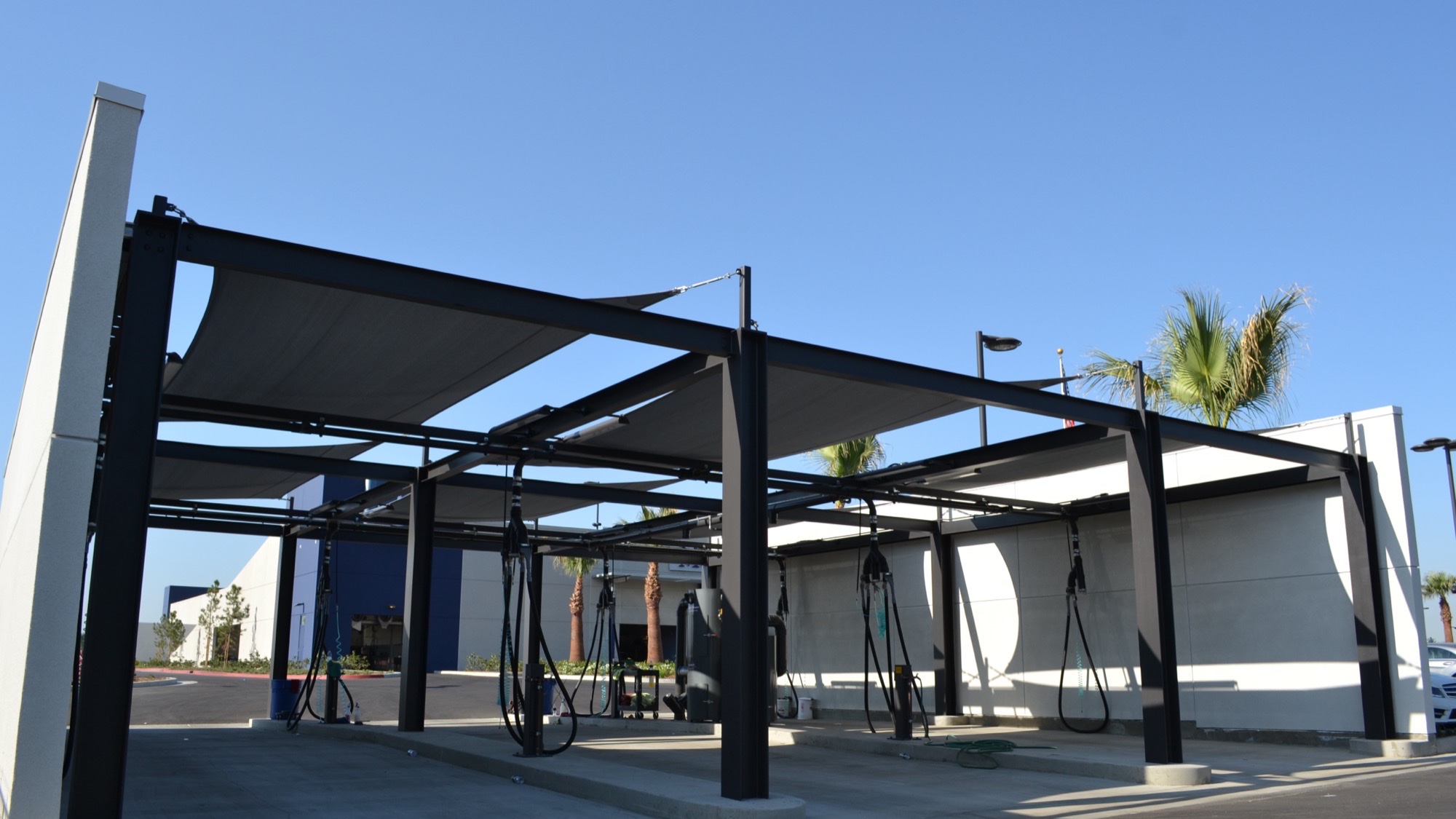
A police fleet parking canopy is a permanent, engineered steel structure designed to cover rows of patrol vehicles, K9 units, motorcycles, or support vehicles in a single continuous shade envelope. Unlike a retail carport pulled from a catalog, one built for a law enforcement facility is typically custom-sized to the lot, engineered around clearance requirements for roof-mounted lightbars and antennas, and finished to match department colors or municipal branding standards. Most police fleet parking canopies fall into one of three structural families: T-bar or post-and-beam canopies with evenly spaced columns down the center or sides of a row, cantilever canopies that eliminate interior columns so cruiser doors and K9 handling areas stay obstruction-free, and hip or gable steel canopies for larger consolidated fleet lots. Each of these can be paired with a solid standing-seam metal roof, a waterproof PVC membrane, or an HDPE mesh fabric roof depending on how much rain protection versus airflow the department needs.
Why Shade Protection Matters for Police Fleet Operations
A police fleet parking canopy is one of the few facility upgrades that pays for itself through equipment longevity rather than curb appeal. Patrol vehicles carry tens of thousands of dollars in upfitting per unit, from mobile data terminals and prisoner partitions to lightbars, push bumpers, and radio consoles. Direct sun exposure degrades all of it faster than a covered lot would. UV exposure breaks down dashboard plastics and door seals, heat cycling stresses electronic housings and connectors, and paint and clear coat on black-and-white or wrapped units fade unevenly under years of unshaded parking. Fleet managers who move vehicles under a parking canopy commonly report longer intervals between interior refurbishment, fewer heat-related electronics failures, and better resale or auction value when units are eventually rotated out of service. There is also an officer-welfare angle: a shaded parking canopy keeps cabin temperatures lower at shift change, which matters when an officer is climbing into a vehicle in body armor during a summer patrol rotation. For departments running K9 units, shade at the parking canopy is not optional. A canopy that keeps a K9 transport vehicle’s rear compartment measurably cooler reduces reliance on idling engines and auxiliary cooling systems between calls. Beyond the vehicles themselves, a well-designed police fleet parking canopy improves the overall function of a secure lot. Covered rows are easier to keep clean of leaf litter and bird debris that would otherwise collect on hoods and roof-mounted equipment, and a canopy structure can be designed to integrate lighting, security camera mounts, and charging infrastructure for hybrid or electric patrol units.
Engineering, Wind Loads, and Safety Standards for Fleet Canopies
Because a police fleet parking canopy is a permanent structure sited at a public-safety facility, it needs to be engineered, not just assembled. Wind engineering is the primary structural concern: a canopy spanning multiple vehicle bays presents significant surface area to wind loading, and an undersized frame or under-anchored footing can fail in a way that damages the very vehicles it was built to protect. Reputable canopy manufacturers design footings and steel gauge to the local wind zone and soil conditions rather than using a one-size-fits-all frame, and submittals for a municipal project typically include stamped structural calculations sized to the jurisdiction’s building code. Departments evaluating a police fleet parking canopy vendor should ask specifically how the structure’s wind load rating was determined and whether the manufacturer’s engineering is done in-house or outsourced, since in-house engineering generally means faster answers when a plan checker in a municipal permitting office asks a follow-up question. Fabric roof structures should also carry documentation on flame-spread rating and fabric tensile strength, and any structure near vehicle fueling or maintenance bays should be reviewed against local fire code setback requirements. For general guidance on how structural wind engineering principles apply to outdoor and shade-adjacent structures, the U.S. Department of Energy’s resources on solar-ready canopy design are a useful starting reference point, particularly for departments considering a combined shade-and-solar canopy over their fleet lot: energy.gov’s solar energy basics overview. ADA access is a secondary but still relevant consideration where a police fleet parking canopy sits adjacent to a public-facing entrance, visitor parking, or an ADA-designated space; walkway clearances and accessible route requirements under a canopy’s support columns should be part of the site plan review, not an afterthought discovered during a final inspection.
Materials and Specifications: Building a Canopy That Lasts
The materials specified for a police fleet parking canopy determine how it performs over a 20-plus year service life in a high-use municipal lot. Frame steel should be hot-dip galvanized or otherwise corrosion-treated before powder coating, since a canopy exposed to years of vehicle exhaust, road salt in colder climates, and constant UV will outlast a painted-only frame by a wide margin. Powder coating also lets a department match the canopy finish to existing facility colors or department branding rather than settling on a stock color. Clear height is one of the most frequently under-specified details on a police fleet parking canopy. Standard patrol sedans and SUVs sit lower than the roof-mounted lightbars, antenna arrays, and push bumpers that get added during upfitting, so the canopy’s eave height needs to account for the tallest equipped vehicle in the fleet, not the base vehicle height off the manufacturer spec sheet. A canopy sized without input from the fleet’s upfitting shop is a common and expensive mistake. On the roof material, solid steel panel roofing gives full rain protection and the most consistent shade but concentrates more wind load on the frame; PVC membrane roofing offers a similarly solid rain barrier with a lighter structural footprint; and HDPE shade mesh allows airflow through the canopy, which helps in hot, low-rainfall climates but will not keep vehicles dry in a storm. Departments in wet climates typically specify PVC or solid steel roofing over theirs, while departments in the arid Southwest more often choose HDPE mesh for its airflow and lower wind loading. Solar-ready framing is increasingly requested on new police fleet parking canopy projects. Departments looking to offset fleet charging costs for hybrid or electric patrol units, or simply reduce facility energy spend, can specify a canopy frame engineered from the outset to carry a solar array, which avoids a costly structural retrofit later.
Police Fleet Parking Canopies by Facility Type
Not every police fleet parking canopy project looks the same, and matching the structure to the facility type up front avoids a lot of rework later. A municipal police department headquarters lot typically needs the largest continuous canopy footprint, since patrol sedans, supervisor vehicles, motorcycle units, and prisoner transport vans all rotate through the same secure yard on overlapping shifts. These lots benefit from a cantilever or wide-bay steel design that keeps sightlines open for staff moving between the building and the vehicles at shift change. A county sheriff’s fleet lot often spans a larger geographic footprint with vehicles assigned to substations rather than a single central yard, which means a project can involve multiple smaller structures rather than one large one. Standardizing the frame design and finish across substations keeps maintenance and future expansion simpler even when the individual canopies are sized differently for each site. School resource officer and campus police fleets usually need a much smaller police fleet parking canopy, sometimes just two or three bays, but placement matters more than size. These structures often sit closer to a campus entrance and need to be coordinated with a district’s existing shade infrastructure and DSA-reviewed site plans if the fleet lot shares a permit package with other campus shade structures. Highway patrol and state-level fleet yards tend to prioritize higher wind ratings for their canopy, since these facilities are more often sited in open, exposed terrain along highway corridors where wind loading is a bigger design factor than it would be in a dense urban headquarters lot. Airport and transit police fleets add another layer of coordination, since canopy height, placement, and any solar array additions typically need sign-off from airport operations or transit authority engineering in addition to the department’s own facilities team.
Secure Lot Layout and Site Planning for Police Facilities
Layout matters as much as materials on a secure police fleet parking canopy project. Row spacing needs to account for officers exiting a vehicle in full duty gear, opening rear doors on a K9 unit or prisoner transport vehicle, and moving equipment between the trunk and the building without squeezing past a support column. A canopy laid out purely to maximize vehicle count per square foot often ends up cramped in daily use. Gate and sally port access should be mapped before the canopy footprint is finalized, since support columns placed too close to a secure gate or turning radius can create a liability the department discovers only after the structure is built. Camera sightlines are another layout factor: a canopy roofline and support columns should be positioned so they do not create blind spots in existing security camera coverage, and many departments choose to mount additional cameras directly to the canopy structure itself once it is in place. Fleet growth is worth planning for at the design stage. A police fleet parking canopy engineered with modular bays can often be extended in a future phase without a full re-engineering effort, which matters for growing municipalities and school district or county sheriff fleets that add vehicles on a multi-year budget cycle rather than all at once.
Custom Canopies’ In-House Process From Consultation to Installation
Custom Canopies Inc. is a family-owned, made-in-America manufacturer that handles police fleet parking canopy projects through a six-step in-house process: consultation, drafting, manufacturing, coating, shipping, and installation. Because engineering, fabrication, and powder coating all happen in-house rather than through subcontracted vendors, departments get custom sizing to the nearest inch, which matters when a structure has to fit an existing lot footprint, work around utility easements, or match clearance requirements dictated by an upfitted vehicle roster. The consultation stage is where row counts, vehicle types, K9 or motorcycle bay requirements, and wind zone data get gathered. Drafting turns that information into a structural layout that a municipal plan checker can review. Manufacturing and powder coating happen at Custom Canopies’ own facility under Contractors License #880322 and Fabricators License #FB00073, and the finished structure is shipped and installed nationally, meaning a department outside California is not limited to a regional fabricator with a smaller in-house engineering bench. For departments who want to see how this same six-step approach applies to secured public and municipal parking, more detail is available on the commercial design page.
Common Buying Mistakes When Specifying Police Fleet Parking Canopies
The most common mistake departments make when specifying a police fleet parking canopy is sizing the structure to today’s fleet count with no allowance for growth, which forces a costly second project a few years later instead of a straightforward extension. A close second is measuring clear height off a base vehicle spec sheet instead of the tallest upfitted unit in the fleet, which can result in a canopy that clips a lightbar or antenna on delivery day. Another frequent error is treating the roof material choice as purely a budget decision rather than a climate decision. HDPE mesh is a lower-cost roof option but leaves vehicles exposed during rain, which defeats part of the purpose in a wet climate. Departments also sometimes skip involving their permitting office early, which can delay a project when wind engineering or setback questions surface late in the process instead of during initial drafting. Finally, some departments default to a generic parking canopy vendor rather than one experienced with secure, public-safety-adjacent sites. A police fleet parking canopy sits in a different risk category than a retail parking lot canopy, and a manufacturer unfamiliar with sally ports, gate clearances, and camera integration can produce a structurally sound canopy that still creates operational headaches once it is in daily use. Comparing this to shade planning for other municipal lots, such as those covered in Custom Canopies’ commercial parking lot shade structures guide, can help procurement teams spot the differences a secure fleet site requires.
What Drives the Cost of a Police Fleet Parking Canopy
Cost on a police fleet parking canopy project is driven primarily by total covered square footage, frame type, and roof material. Cantilever designs generally cost more per bay than post-and-beam layouts because the engineering has to carry load without interior support columns, but many departments accept that premium in exchange for unobstructed vehicle doors and easier K9 handling. Roof material is the next major driver: solid steel panel roofing costs more than PVC membrane, which in turn typically costs more than HDPE shade mesh, though the gap narrows once wind engineering for a given site is factored in. Site conditions also affect cost. Poor soil conditions can require deeper or larger footings, and a lot with existing utility lines or limited crane access for steel erection can add labor cost independent of the structure itself. Departments budgeting for one should request a site-specific quote rather than relying on a national average, since wind zone, soil report findings, and local permitting requirements all move the final number. Municipal facilities teams and procurement officers can find general guidance on shared capital-budget considerations for public shade infrastructure in Custom Canopies’ park and municipal shade structures guide, much of which applies directly to police and sheriff fleet lots funded through the same capital cycles.
Frequently Asked Questions About Police Fleet Parking Canopies
How much clear height does a police fleet parking canopy need?
Clear height should be measured off the tallest fully upfitted vehicle in the fleet, including lightbars and antennas, with additional clearance for wind sway and future vehicle changes. A canopy sized only to base vehicle height is one of the most common and costly specification errors departments make.
What roof material is best for a police fleet parking canopy?
It depends on climate. Solid steel panel or PVC membrane roofing gives full rain protection, which matters in wetter regions, while HDPE shade mesh allows airflow and works well in hot, dry climates but will not keep vehicles dry during a storm.
Are police fleet parking canopies engineered for wind loads?
Yes, and they should be. A permanent canopy spanning multiple vehicle bays needs stamped structural calculations sized to the local wind zone and soil conditions, not a generic frame pulled from a catalog. In-house engineering typically means faster answers during municipal permitting review.
Can a police fleet parking canopy be designed around K9 units?
Yes. Cantilever framing that removes interior support columns makes it easier to open rear compartments and handle K9 units without squeezing around a post, and canopy layouts can dedicate specific bays with wider spacing for K9 vehicles.
Can a fleet canopy be built to support solar panels?
Yes, if the frame is engineered for it from the start. Departments planning to offset fleet charging or facility energy costs should specify solar-ready framing during the drafting stage rather than attempting a structural retrofit after the canopy is built.
How long does it take to design and install a police fleet parking canopy?
Timelines vary by structure size, permitting jurisdiction, and site conditions, but the process generally follows consultation, drafting, manufacturing, coating, shipping, and installation in sequence, with municipal permitting review often the largest variable in overall project timeline.
Does a police fleet parking canopy need to match department branding?
It can. Because frames are powder coated in-house, departments can specify a finish color that matches existing facility branding or department colors rather than choosing from a limited stock palette.
Get a Quote for Your Police Fleet Parking Canopy
Custom Canopies designs and builds police fleet parking canopies engineered for secure municipal lots nationwide, from consultation through installation, with in-house engineering, fabrication, and powder coating at every step. If your department or municipality is planning a canopy project for its fleet, call (562) 464-4646 or visit the contact page to start a site-specific consultation and quote.
Free Project Quote
What type of project is this?
Tell us where the shade structure is going and a specialist will design around your site.
Free Project Quote
Tell us about your project
A sentence or two is plenty. Size, location, and timeline help us quote faster.
Free Project Quote
Where should we send your quote?
A shade specialist will review your project and reach out within 1 business day.
Thanks! We’ll be in touch shortly.
A shade specialist will review your project and reach out within 1 business day. Prefer to talk now? Call (562) 464-4646.