Playground Shade Structures: A Commercial Buyer’s Guide
For schools, parks departments, childcare centers, and HOAs, an unshaded playground is quickly becoming a liability rather than an amenity, and playground shade structures have moved from nice-to-have to standard specification. Playground surfacing in direct sun routinely reaches temperatures capable of burning a child’s skin in seconds, and pediatric health organizations have spent the last decade urging districts and municipalities to treat sun protection as part of basic playground safety. At the same time, facilities managers know the practical side of the problem: equipment that is too hot to touch sits unused for half the year, rubber surfacing degrades faster under UV exposure, and parents notice which facilities take the issue seriously.
Playground shade structures solve all three problems at once. They protect children from UV radiation, extend the usable hours of the play area, and protect the six-figure investment sitting underneath them. This guide walks commercial buyers through the structure types, compliance requirements, materials, and procurement considerations that matter when specifying shade for a playground project.
Why Playground Shade Is a Requirement, Not an Upgrade
The case for playground shade starts with heat and UV exposure. Uncovered steel and plastic play components in full sun can exceed 160 degrees Fahrenheit, well past the threshold for contact burns. The U.S. Consumer Product Safety Commission has documented thermal burn hazards on public playgrounds and specifically identifies solar-heated equipment and surfacing as a risk to young children, whose skin burns faster than adult skin. Their guidance is laid out in the CPSC Public Playground Safety Handbook.
UV exposure is the second driver. Childhood sunburns meaningfully increase lifetime skin cancer risk, and children accumulate a large share of their total sun exposure during school and daycare hours. Commercial-grade shade fabric blocks the majority of harmful UV radiation over the covered area, which is why school districts and municipal parks departments increasingly write shade into playground specifications from day one.
There is also a straightforward asset-protection argument for procurement teams. Playground equipment, poured-in-place rubber, and engineered wood fiber all degrade under constant UV bombardment. Shading the play environment slows fading, cracking, and material breakdown, which extends replacement cycles on equipment that often costs more than the shade structure protecting it.
The Main Types of Playground Shade Structures
Most playground shade projects use one of four structural approaches. The right choice depends on the footprint of the play area, the equipment layout, wind and snow loads at the site, and how the space is used.
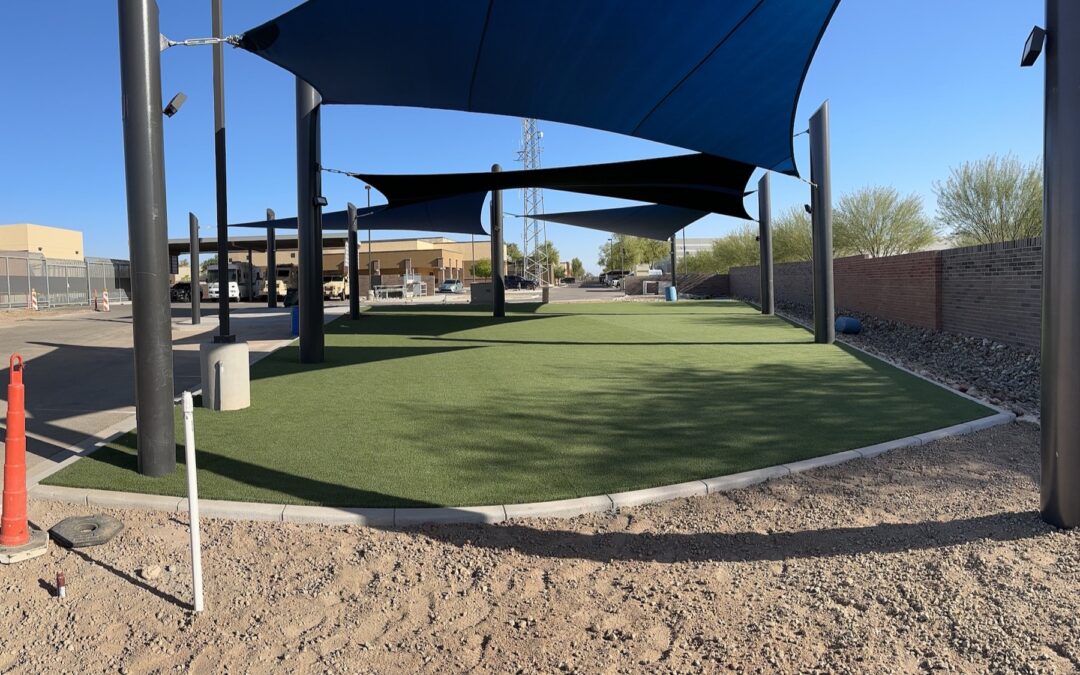
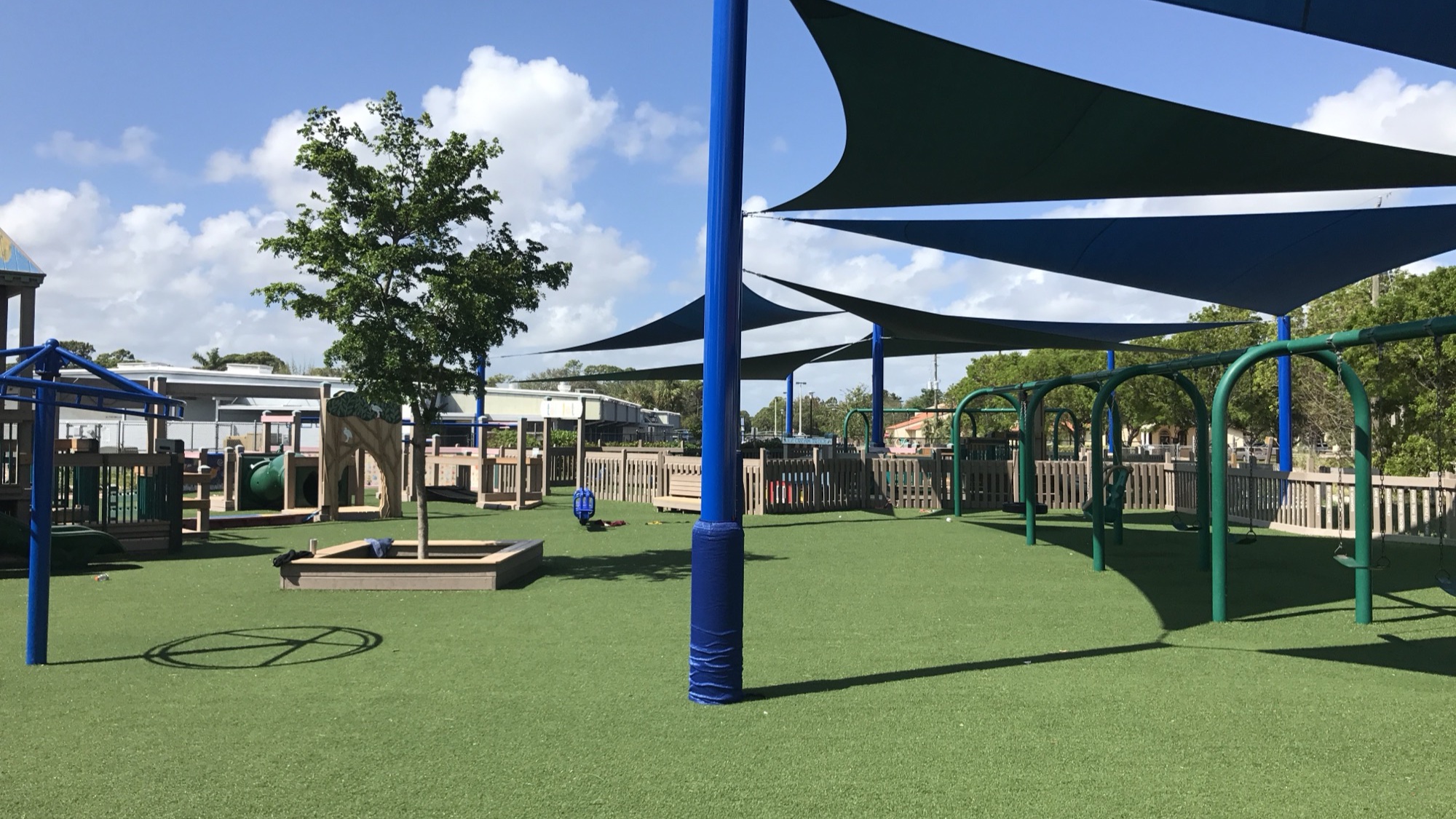
Shade sails are tensioned fabric membranes anchored to steel posts. Overlapping triangular or rectangular sails at varying heights create the layered, architectural look many districts want, and they handle irregular playground footprints well. Sails are frequently the most cost-effective way to cover a large area.
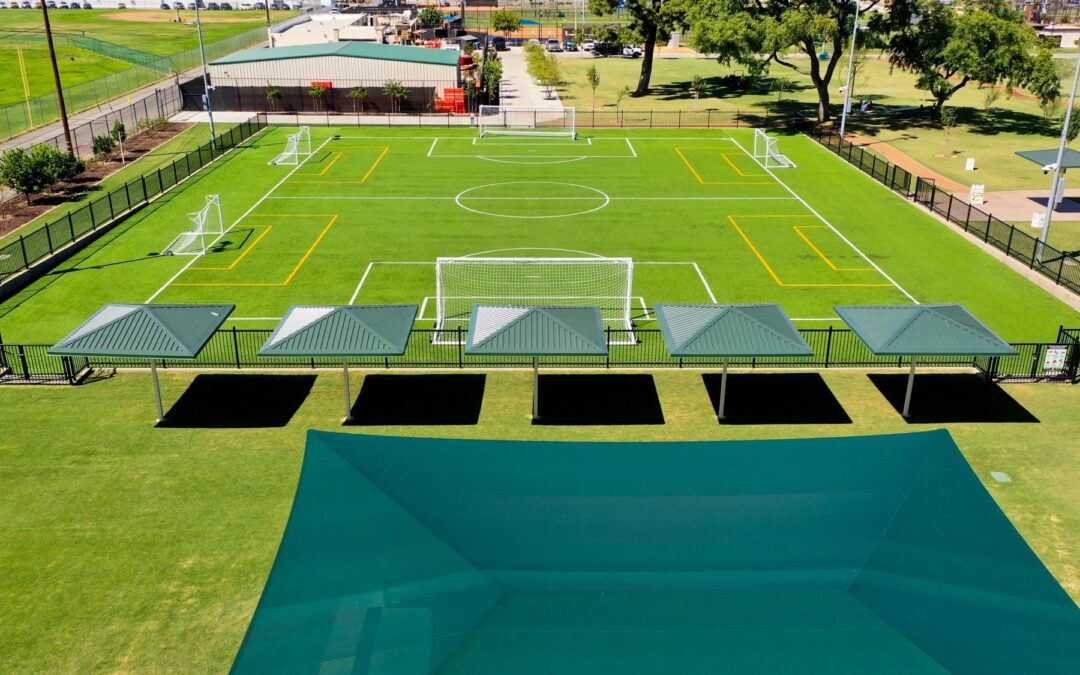
Hip and pyramid canopies are frame-supported fabric roofs on four or more columns. Because the fabric is stretched over a full steel frame, they offer consistent coverage and a clean, traditional profile. Multi-panel hip configurations can cover very large play zones while keeping columns outside equipment use zones.
Cantilever structures place all columns along one side or end of the covered area, leaving the space underneath completely open. On playgrounds, cantilevers are valuable because they eliminate interior posts that would otherwise create collision hazards inside the play zone.
Custom steel structures handle everything that standard catalog shapes cannot: wrap-around coverage for oddly shaped equipment clusters, extreme heights for tall play towers, or designs that need to match campus architecture. Because Custom Canopies engineers and fabricates in-house, structures can be sized to the nearest inch rather than forced into the closest stock dimension. You can see examples across project types on our commercial design page.
Safety and Compliance: CPSC, ADA, and Engineering Requirements
Playgrounds are one of the most regulated environments a shade structure can occupy, and compliance needs to be addressed at the design stage, not after installation.
Use zones and post placement. CPSC guidance and ASTM playground standards define clearance zones around slides, swings, and climbers. Shade columns must be positioned outside these use zones or protected appropriately. This is a primary reason playground shade should be custom-designed around the actual equipment layout rather than dropped in as a standard-size kit.
Accessibility. Public playgrounds fall under the Americans with Disabilities Act. Shade structures must not obstruct accessible routes to and through the play area, and covered seating or gathering spaces should remain reachable along compliant paths. The requirements for play areas are published at ADA.gov.
Structural engineering. A permanent shade structure is a building in the eyes of your local jurisdiction. It needs engineered footings and framing that meet the wind, snow, and seismic requirements of the site, stamped drawings for permitting, and, for California school projects, DSA compliance. Custom Canopies produces engineered drawings in-house as part of its standard 6-step process, and holds Contractors License #880322 along with Fabricators License #FB00073, which matters to districts that require licensed contractors on public work.
Fire and fabric certifications. Many jurisdictions require flame-retardant shade fabric certifications for structures at schools and public facilities. Confirm that the fabric specified for your project carries the certifications your permitting authority expects.
Materials and Specifications That Matter
Two structures can look identical in a rendering and perform very differently over a decade of service. These are the specification points procurement teams should compare.
Shade fabric. High-density polyethylene (HDPE) knitted mesh is the standard for playground shade. Commercial-grade HDPE blocks the large majority of UV radiation, allows hot air to vent through the weave, and can lower the perceived temperature underneath significantly compared to open sun. For applications that need full rain protection over the play area or adjacent seating, waterproof PVC membrane is the alternative, trading airflow for dry coverage.
Steel and coatings. The frame is where corners get cut. Look for structural steel sized by an engineer for your actual site loads, welded connections fabricated in a controlled shop environment, and powder-coated finishes rather than field-painted steel. Powder coating bakes a durable finish onto the frame that stands up to sun, moisture, and playground traffic far better than paint. Custom Canopies powder coats in-house as a dedicated stage of production.
Footings and anchoring. Playground structures are tall, light, and catch wind like a sail, so the foundation design carries the project. Engineered concrete footings matched to your soil conditions and local wind speeds are non-negotiable for a permanent installation.
Country of manufacture. Made-in-America fabrication matters on public projects for more than preference. Domestic manufacturing shortens lead times, simplifies warranty service, and satisfies the domestic-content purchasing requirements that apply to many publicly funded playground projects. Every Custom Canopies structure is manufactured in the United States.
Why Custom Sizing Beats Catalog Kits on Playgrounds
The single most common playground shade mistake is buying a stock-size structure and discovering that it either leaves play equipment exposed at the edges or forces columns into clearance zones. Playgrounds are rarely neat rectangles. Equipment gets added over the years, borders curve, and the geometry that needs coverage is almost never a standard catalog dimension.
This is where in-house engineering and fabrication changes the outcome. Custom Canopies designs each structure to the nearest inch around the actual site: the equipment layout, the use zones, the accessible routes, and the sun path. The process runs through six defined stages, from consultation and drafting through manufacturing, powder coating, shipping, and installation, so the structure that arrives on site matches the drawings your district or board approved.
Custom sizing also affects shade performance itself. Because the sun moves, a canopy sized exactly to the play area’s footprint shades that footprint well at noon and poorly at 3 PM. Designing panel heights, overhangs, and orientation around the site’s sun exposure keeps the equipment usable through the full day, which is the entire point of the investment. Schools weighing this decision can also review our related post on how public schools benefit from shade sails.
Playground Shade Structures by Facility Type
While the engineering fundamentals stay the same, the right playground shade structure looks different depending on who owns the playground and how it gets funded.
Public school districts typically buy playground shade structures through a formal procurement process with board approval, prevailing wage requirements, and, in California, DSA review. Districts usually favor hip canopies and multi-panel sail systems that cover the full play zone, and they need a manufacturer who can produce the stamped engineering documents the district’s facilities department will file. Summer break is the preferred installation window, which means the design and permitting clock needs to start in winter or early spring.
Parks and municipalities often fund playground shade structures through capital improvement budgets or community development grants. Municipal buyers care about vandal resistance, replaceable fabric, and long service life, because a city playground sees heavier and less supervised use than a school site. Cantilever designs are popular in parks because they keep columns out of mowing and maintenance paths.
Childcare centers and early learning campuses tend to need smaller playground shade structures, but with stricter shading performance. Toddler skin burns faster, licensing inspections look at outdoor play conditions, and parents touring the facility notice shade immediately. Full-coverage canopies over the entire play yard are common here.
HOAs and community developments buy playground shade structures as an amenity investment. The structure has to look good in marketing photos as well as perform, so color selection, sail geometry, and how the design complements the surrounding architecture carry more weight. Boards also appreciate that shade protects the playground equipment itself, which the HOA reserve fund would otherwise replace sooner.
How Playground Shade Structure Installation Works
Buyers are often surprised that the fabric and steel are the fast part of a playground shade structure project. The sequence below is how Custom Canopies runs every installation, and it maps to the questions a facilities manager should ask any vendor.
1. Consultation. Site dimensions, equipment layout, sun orientation, and goals are gathered, along with photos and any existing site plans.
2. Drafting and engineering. The structure is designed to the nearest inch around use zones and accessible routes, then engineered for local wind, snow, and seismic loads. This is where permit drawings and DSA documentation are produced.
3. Manufacturing. Steel is cut, welded, and fitted in-house, and the shade fabric is patterned and sewn to the exact geometry of the frame.
4. Powder coating. Frames are powder coated in-house in the specified color, a baked finish that outlasts field paint by years.
5. Shipping. The finished structure ships from the U.S. factory to the site, staged to match the installation schedule.
6. Installation. Footings are excavated and poured, columns set, and fabric tensioned. On playgrounds, installation is sequenced to protect existing surfacing and equipment, and the site is returned ready for use.
Because one licensed company handles all six stages, there is no gap between what was engineered and what gets installed, and no finger-pointing between a fabricator, an engineer, and an installer if something needs adjusting.
Common Mistakes to Avoid When Buying Playground Shade Structures
Buying on square footage alone. Two quotes for “30 by 40 feet of shade” can describe completely different products. Compare steel gauge, fabric warranty, engineering inclusions, and who performs the installation before comparing price.
Ignoring the sun path. Shade moves. A canopy that covers the slide at noon may leave it exposed during afternoon pickup hours. Ask the designer to account for morning and afternoon sun angles, not just the footprint.
Forgetting the permit timeline. The most common cause of a missed installation window is starting permitting too late, not slow fabrication. Get engineering started months before you need the structure standing.
Placing columns inside use zones. A stock-size kit dropped over an existing playground almost guarantees a column lands where CPSC guidance says it should not. Custom design around the equipment layout removes the problem entirely.
Treating fabric as an afterthought. The fabric is the product doing the shading. Confirm UV block percentage, flame certifications, warranty length, and replacement cost in writing.
Budgeting and Procurement: What Drives Project Cost
Playground shade pricing varies widely because the projects themselves vary widely. Rather than anchoring to a generic number, budget owners should understand the factors that move the total.
Coverage area and height are the largest drivers. More square footage means more fabric and steel, and taller clearances above play towers increase column and footing sizes.
Structure type matters. Cantilevers cost more than post-supported designs of the same coverage because the engineering works harder. Waterproof membranes cost more than shade mesh.
Site conditions including soil, access for equipment, existing surfacing that must be cut and restored, and local wind or snow loads all flow into the footing and steel design.
Permitting and compliance scope such as DSA review for California schools adds engineering and documentation time that should be planned into the schedule, not discovered during it.
For procurement teams, the practical takeaway is to get a site-specific design and quote early, before budgets are locked. Because Custom Canopies handles consultation, drafting, and engineering in-house, commercial buyers get real numbers based on their actual site rather than catalog estimates that shift once engineering begins. Answers to common purchasing questions are collected on our FAQ page.
Maintaining a Playground Shade Structure
One of the strongest arguments for a properly engineered shade structure is how little ongoing attention it needs, but “low maintenance” should not be confused with “no maintenance,” especially in an environment used by children every day.
Facilities teams should put the structure on the same inspection schedule as the playground equipment itself. A quick visual check covers fabric tension and condition, hardware at the connection points, and any signs of impact or vandalism at the columns. Tensioned fabric should stay drum-tight; a canopy that starts to sag or flutter in wind is telling you a turnbuckle or fitting needs adjustment before the movement accelerates wear.
Twice a year, it is worth washing the fabric with water and mild soap to clear dust, pollen, and organic debris that can hold moisture against the material. Powder-coated steel needs only an occasional rinse and a touch-up if the coating is ever chipped down to bare metal, which prevents corrosion from getting a foothold.
Finally, keep the engineering documents. The stamped drawings, fabric specifications, and any seasonal removal requirements should live in the facility’s maintenance file, because the crew servicing the structure in year twelve will not be the crew that installed it. Buyers who want a deeper look at long-term durability can read our post on how canopies withstand bad weather.
Frequently Asked Questions About Playground Shade Structures
How much cooler is it under a playground shade structure?
Commercial HDPE shade fabric blocks most direct solar radiation, and the felt temperature under a well-designed canopy is commonly 15 to 20 degrees cooler than adjacent open sun. Equally important, shaded equipment and surfacing stay near ambient temperature instead of heating to burn-risk levels.
Do playground shade structures require permits?
Permanent structures almost always require a building permit with stamped engineering. School projects in California additionally go through DSA. A qualified manufacturer provides the engineered drawings and documentation as part of the project.
Can shade be added over existing playground equipment?
Yes, and it is one of the most common project types. The structure is designed around the existing equipment layout so columns land outside use zones and accessible routes, and installation is sequenced to protect the surfacing already in place.
What is the lifespan of a playground shade structure?
Engineered steel frames with powder-coated finishes are long-term assets that routinely serve for decades. Fabric canopies are designed to be tensioned, removable, and replaceable, so the fabric can be renewed later in the structure’s life without touching the steel.
Should the fabric come down in winter or before storms?
It depends on the design loads. Some structures are engineered for year-round fabric, while sites with heavy snow may specify seasonal removal. This is defined during engineering, so ask for it in writing with your quote.
What size playground shade structure do I need?
Measure the full play area including fall zones, then design for the sun path rather than just the footprint. Because Custom Canopies builds each playground shade structure to the nearest inch, sizing follows your site instead of forcing your site into a catalog dimension.
Are playground shade structures worth the investment?
For most facilities, yes, and on three fronts at once: reduced burn and UV liability, longer usable hours for the play area through hot months, and slower UV degradation of equipment and surfacing that costs more to replace than the shade protecting it.
How long does a playground shade project take?
Timeline is driven by engineering, permitting, and fabrication. Straightforward projects move in a few months, while DSA school projects run longer due to state review. Starting the consultation and drafting stages early is the best way to hit a summer installation window.
Design Your Playground Shade Structure
A playground shade structure is a safety upgrade, an asset protector, and often the most visible improvement a school, park, or community can make for the families who use it. The difference between a structure that performs for decades and one that disappoints is decided early, in sizing, engineering, and material selection.
The buyers who end up happiest follow the same path: they measure the real problem (heat, UV exposure, unusable equipment), get a site-specific design early, insist on stamped engineering and licensed installation, and choose a manufacturer who stands behind the whole structure rather than one piece of it. Whether you manage a single childcare play yard or a district’s worth of campuses, the process for specifying playground shade structures is the same, and it starts with a conversation about your site.
Custom Canopies designs, engineers, fabricates, powder coats, and installs playground shade structures and commercial shade of every type nationwide, all in-house and all made in America. Tell us about your playground project through our contact page or call (562) 464-4646 to speak with a shade specialist.
Free Project Quote
What type of project is this?
Tell us where the shade structure is going and a specialist will design around your site.
Free Project Quote
Tell us about your project
A sentence or two is plenty. Size, location, and timeline help us quote faster.
Free Project Quote
Where should we send your quote?
A shade specialist will review your project and reach out within 1 business day.
Thanks! We’ll be in touch shortly.
A shade specialist will review your project and reach out within 1 business day. Prefer to talk now? Call (562) 464-4646.