Permanent vs Portable Shade Structures: A Commercial Buyer’s Guide
Every facilities manager, procurement officer, or general contractor eventually faces the same decision: permanent vs portable shade structures. The choice looks simple on the surface, a pop-up canopy costs less upfront than an engineered structure, but the long-term math tells a different story. Playgrounds, restaurant patios, school campuses, parks, HOAs, and military installations all have very different risk tolerances, budgets, and durability requirements, and the wrong choice between permanent and portable shade structures can mean replacing a canopy every one or two seasons instead of every twenty years. This guide breaks down permanent vs portable shade structures across cost, materials, safety, compliance, and real-world commercial use cases, so your team can make a defensible, budget-conscious decision the first time.
What Are Permanent vs Portable Shade Structures?
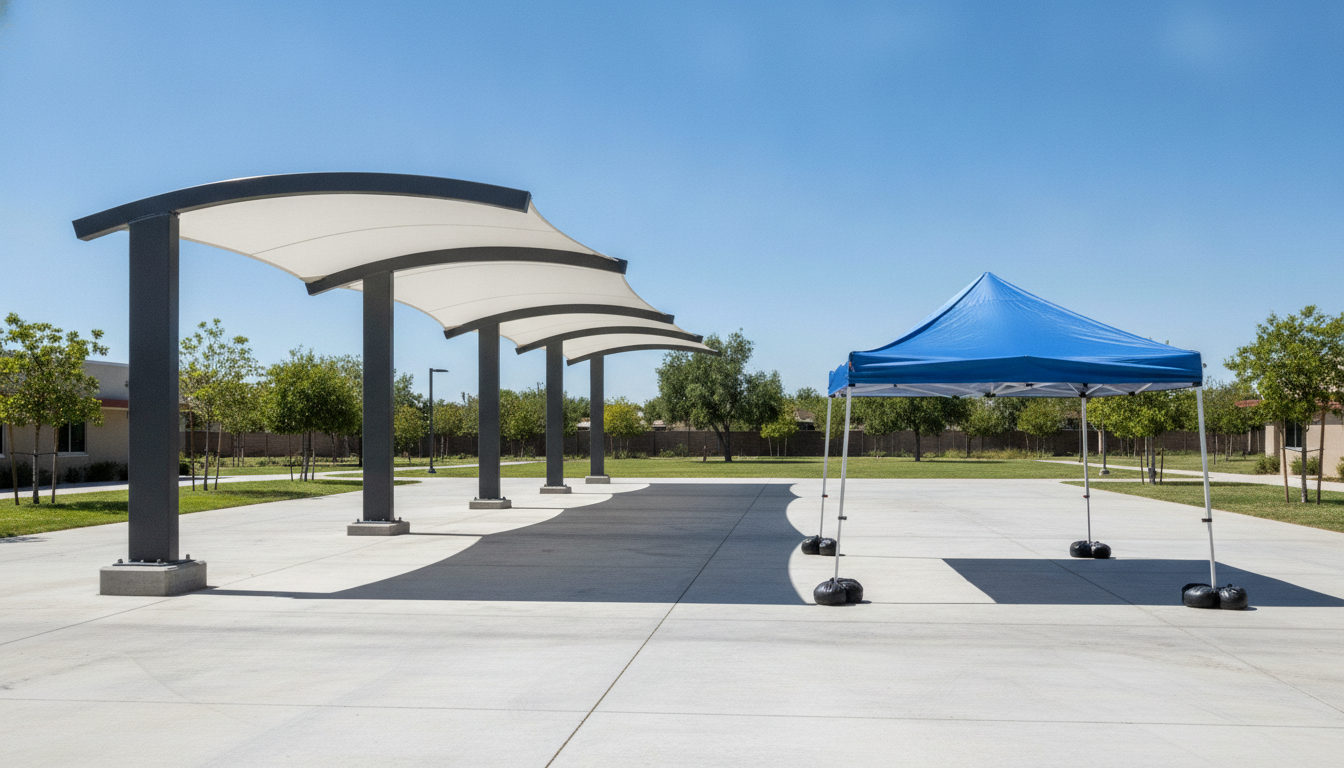
A permanent shade structure is engineered and fabricated for a specific site: footings are poured, steel columns are anchored below grade, and a tensioned fabric or metal roof is fitted to the exact dimensions of the space. A portable shade structure, by contrast, is a pop-up or frame canopy designed to be assembled, moved, and stored, typically weighted down with sandbags or stakes rather than anchored into concrete. Both serve the same basic purpose, blocking UV exposure and heat, but they are built for entirely different lifespans and use cases. When commercial buyers weigh permanent vs portable shade structures, the underlying question is really: does this site need a fixture, or a tool?
Permanent shade structures are custom sized to the nearest inch, engineered to local wind and snow load codes, and finished with powder-coated steel that resists corrosion for decades. Portable structures are mass-produced in standard sizes, use lighter aluminum or steel tubing, and are rated for occasional, supervised use rather than continuous outdoor exposure. Understanding this core difference between permanent and portable shade structures is the first step in any commercial procurement decision.
When Portable Shade Structures Make Sense
Portable canopies aren’t a bad product, they’re simply built for a different job. Commercial buyers reach for portable shade structures for one-day events, farmers markets, temporary vendor booths, seasonal sports tournaments, or as a stopgap while a permanent shade structure is being designed and fabricated. If a site only needs shade a handful of days per year, the capital outlay of a permanent structure may not be justified, and a portable option is the more practical choice.
The tradeoffs show up quickly once a portable structure is left outdoors for extended periods. Standard canopy fabric is not UV-stabilized to the same standard as commercial shade fabric, so it fades, chalks, and tears within one to two seasons of daily sun exposure. Lightweight frames are prone to bending in wind gusts above 20-25 mph, and sandbag or stake anchoring is not rated for the sustained wind loads that permanent anchor systems handle. For playgrounds, restaurants, schools, and parks with daily foot traffic, a portable structure that fails in a wind event isn’t just an inconvenience, it’s a liability exposure. This is the tradeoff at the center of the permanent vs portable shade structures conversation: convenience today versus stability for years to come.
Why Commercial Buyers Choose Permanent Shade Structures
For any site with recurring or year-round shade needs, permanent shade structures are the clear commercial choice. Custom Canopies Inc. builds every permanent structure through an in-house 6-step process, consultation, drafting, manufacturing, coating, shipping, and installation, so the finished structure is engineered to the exact footprint, sun angle, and code requirements of the site rather than a generic catalog size.
Because everything is fabricated in-house and custom sized to the nearest inch, permanent shade structures fit tight urban lots, irregular playground layouts, and restaurant patios with existing hardscape constraints without wasted overhang or awkward gaps. Powder coating protects the steel frame against corrosion, UV degradation, and chipping for the life of the structure, which for a well-maintained permanent installation is typically 15-20+ years. When a facilities team compares permanent vs portable shade structures on a per-year cost basis rather than sticker price alone, permanent structures almost always win for any site used more than a few weeks per year. Made-in-America fabrication also means faster lead times and easier warranty support than importing a structure from overseas.
Materials, Specs, and Wind Ratings: Permanent vs Portable Shade Structures
The materials gap between permanent and portable shade structures is the biggest driver of long-term performance. Permanent structures use commercial-grade HDPE or PVC shade fabric rated for 90-95% UV block, tensioned across a powder-coated steel or aluminum frame that is engineered to regional wind and snow load codes, often rated for sustained winds well above 90 mph depending on anchor design. Anchor systems use poured concrete footings sized to the structure’s height and sail area, not surface-level stakes.
Portable structures use lighter consumer-grade fabric, usually polyester with a basic water-resistant coating, and aluminum or light steel legs rated for occasional wind exposure only, generally 15-20 mph before manufacturer guidance calls for takedown. Buyers evaluating shade sails, triangular sails, or commercial umbrellas for a permanent installation should always request the fabric’s UV rating, the frame’s wind rating, and the recommended anchor system in writing before comparing bids. A structure without a documented wind rating is not appropriate for unattended outdoor commercial use, which is exactly where many portable shade structures fall short compared to permanent alternatives.
Cost and ROI: Permanent vs Portable Shade Structures Over Time
Portable canopies typically cost a fraction of a permanent structure’s upfront price, which is exactly why they get considered for budget-constrained projects. But the lifecycle cost tells a different story. A portable canopy left outdoors year-round in a commercial setting, a school courtyard, a restaurant patio, a park pavilion, typically needs fabric replacement within 12-24 months and frame replacement within 2-4 years due to fatigue and wind damage. Multiply that replacement cycle over a 15-20 year horizon and the total cost of ownership for portable structures frequently exceeds the cost of a single permanent installation, before accounting for labor to reassemble, store, or repair damaged units after every storm event.
Permanent structures carry a higher upfront cost but amortize over a much longer service life with minimal maintenance beyond periodic fabric inspection. For procurement teams building a capital budget, framing the comparison as cost-per-year-of-service rather than sticker price is the more defensible way to present permanent vs portable shade structures to a board, city council, or ownership group. Facilities that need coverage in one location for more than roughly three to five years should model both options on a per-year basis before signing off on the cheaper portable option. Financing and phased installation can also close much of the upfront cost gap between permanent and portable shade structures, so buyers should ask about payment options before defaulting to the portable route on price alone.
Real-World Applications by Venue Type
Playgrounds: Municipal and private playgrounds see continuous daily use in direct sun, and portable canopies simply cannot hold up to that schedule. Permanent shade structures engineered for playground fall zones and anchor clearances are the standard for any playground operator serious about UV protection and liability reduction.
Restaurants: Outdoor dining patios need shade that looks intentional and matches the brand, not a rental-grade pop-up tent that has to be broken down before every storm. Permanent shade sails and canopies let restaurants keep patio seating open and profitable through peak summer months without staff managing a portable structure daily.
Schools: K-12 campuses need shade over courtyards, bus loading zones, and outdoor learning areas that will survive a full school year of unsupervised exposure. Permanent structures also satisfy the compliance documentation that school district facilities departments require, something a portable canopy purchase order rarely includes.
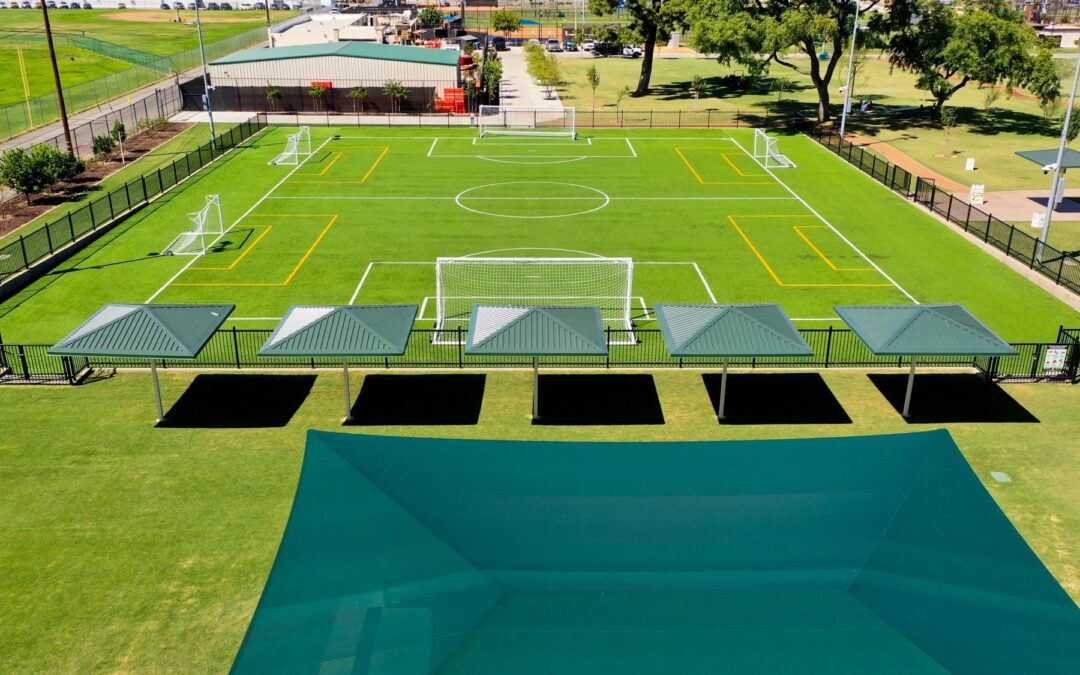
Parks and municipalities: Public parks carry the highest liability exposure of any venue type on this list, since the general public uses the space unsupervised. Permanent shade structures with engineered anchor systems are the only realistic option for a park department managing risk across dozens of sites.
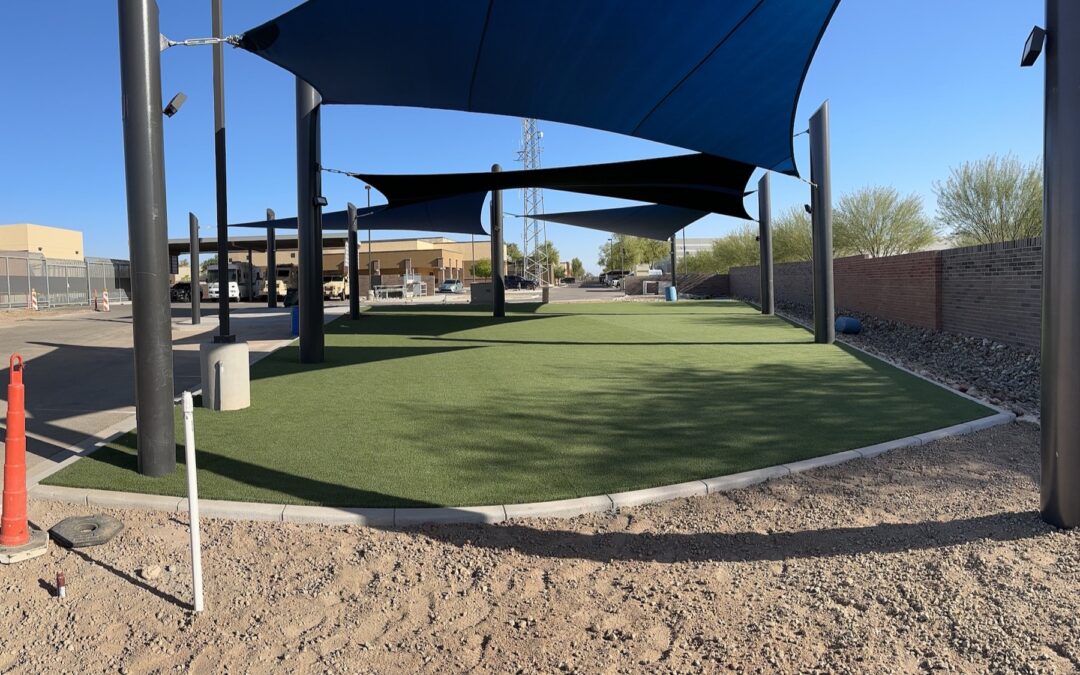
Military and government sites: Bases and government facilities often need shade structures that meet specific procurement and engineering documentation standards. Permanent structures fabricated with full engineering drawings and material specs are far easier to push through a government procurement process than a commodity portable canopy.
HOAs and common areas: Homeowners associations managing pools, playgrounds, and clubhouse patios want shade structures that hold their appearance for years without an HOA board member replacing torn fabric every spring. A permanent structure protects both the budget and the curb appeal of the community.
Safety, Compliance, and Liability Considerations
Safety and compliance are where permanent vs portable shade structures diverge the most for institutional buyers. Playgrounds, schools, and parks operating shade structures need to consider CPSC playground safety guidance around fall zones, anchor clearances, and structural stability, standards portable canopies were never engineered to meet for unsupervised public use. ADA-compliant shade structures also require specific clearance heights and path-of-travel widths that a temporary pop-up frame typically cannot guarantee once it shifts or is repositioned after setup.
Permanent structures are engineered to ASTM shade structure standards and local building codes, with anchor systems designed by licensed engineers for the site’s specific wind, soil, and load conditions. This matters directly for liability: if a portable canopy tips or collapses in a wind event on a playground or restaurant patio and causes injury, the facility’s insurance carrier will ask whether the structure was rated for permanent outdoor use, and a portable frame with sandbag anchoring will not satisfy that question. Custom Canopies Inc. holds Contractors License #880322 and Fabricators License #FB00073, and every permanent installation is engineered and documented to meet the compliance standards commercial insurers and inspectors expect.
Installation Timelines and Process Differences
One reason buyers default to portable shade structures is the assumption that permanent installation takes too long. In practice, the 6-step Custom Canopies Inc. process, consultation, drafting, manufacturing, coating, shipping, and installation, is planned around the buyer’s timeline from the first call. Drafting and manufacturing happen in-house rather than through a third-party importer, which shortens lead time considerably compared to overseas-sourced permanent structures. Portable structures can be set up in an afternoon, but for any site that will keep the structure in place for more than a season, the few extra weeks of lead time on a permanent structure pays for itself many times over in reduced maintenance and replacement costs.
Maintenance and Long-Term Care
Maintenance is another underestimated factor in the permanent vs portable shade structures decision. Portable canopies require regular disassembly, cleaning, and dry storage between uses to slow fabric degradation, and even with careful storage, seam tape and coatings break down from repeated UV exposure and folding stress. Facilities teams managing multiple portable units across several sites often find that inspection and re-tensioning labor adds up to a meaningful recurring cost that rarely gets factored into the original purchase decision.
Permanent shade structures require comparatively little ongoing maintenance. An annual visual inspection of the fabric tension, hardware, and footings is typically sufficient to keep a permanent structure performing for its full engineered lifespan. Because the powder-coated steel frame is not exposed to repeated assembly and folding, the structural components simply don’t experience the same fatigue that shortens a portable canopy’s usable life. For facilities managers overseeing shade structures across several properties, this maintenance gap between permanent and portable options often becomes the deciding factor once the first replacement cycle on a portable unit comes due.
Questions to Ask Before You Buy
Before signing a purchase order for either a permanent or portable shade structure, commercial buyers should get clear answers to a short list of questions. How many days per year will the structure actually be in use, and is that use supervised or unattended? What wind and UV ratings does the manufacturer provide in writing, and are they specific to this structure or a generic product line? Who is responsible for engineering sign-off, permitting, and anchor design if the structure is going in a public or semi-public space? And finally, what does the manufacturer’s warranty actually cover, frame, fabric, and coating, and for how long? A vendor that cannot answer these questions in detail for a permanent vs portable shade structures comparison is not equipped to support a serious commercial procurement decision. Custom Canopies Inc. provides full engineering documentation, material specs, and warranty terms with every quote so buyers can compare permanent and portable shade structures on equal footing before committing budget.
Choosing the Right Fit for Your Site
The right answer to permanent vs portable shade structures depends on how long the site needs coverage and how much liability exposure the organization can accept. A one-weekend event or seasonal vendor booth is a reasonable use case for a portable canopy. A playground, restaurant patio, school courtyard, park pavilion, military base, or HOA common area used daily for years is a job for an engineered permanent structure. Buyers who start with a clear answer to “how many days per year will this structure be in use, and who is liable if it fails” will almost always land on the correct choice in the permanent vs portable shade structures decision without needing to compare quotes line by line. Review the site’s custom shade structure design options and specs before finalizing a budget, since a properly engineered permanent structure often costs less than buyers initially assume once financing and lifecycle costs are factored in.
Frequently Asked Questions About Permanent vs Portable Shade Structures
Is a portable shade structure ever a good long-term solution? Only for sites with intermittent, supervised use, such as seasonal markets or one-time events. For daily commercial use, permanent shade structures outperform portable canopies in cost, safety, and durability within two to three years.
How much does a permanent shade structure cost compared to a portable canopy? Upfront, permanent structures cost more, but total cost of ownership over 15-20 years is typically lower once portable fabric and frame replacement cycles are factored in. See our guide on commercial canopy installation cost for a detailed cost breakdown.
What wind rating should a commercial shade structure have? Permanent structures should be engineered for local code wind loads, often 90+ mph depending on region, with anchor systems sized to the structure’s sail area. Portable structures are generally rated for 15-20 mph and require manual takedown above that threshold.
Do permanent shade structures need to be ADA compliant? Yes, for any structure covering a public path of travel, seating area, or accessible amenity. See our ADA compliant shade structures guide for clearance and slope requirements.
Can a portable canopy be upgraded to a permanent structure later? Not directly, the frame, fabric, and anchor systems are engineered differently. Most commercial buyers use a portable canopy as a temporary measure while a permanent shade structure is designed and fabricated.
Who is liable if a portable shade structure fails on commercial property? Liability generally falls on the property owner or operator if the structure was not rated for the conditions it failed in. This is a primary reason schools, parks, and municipalities move from portable to permanent shade structures for daily-use sites.
How long does a permanent shade structure take to install compared to a portable canopy? A portable canopy can be set up in an afternoon, while a permanent structure typically takes several weeks from consultation through installation. Most of that time is drafting and manufacturing, not on-site work, and the on-site installation itself is usually completed in one to a few days depending on structure size.
Do permanent shade structures require a permit? In most municipalities, yes, since the structure involves poured footings and an engineered anchor system. Custom Canopies Inc. provides the engineering documentation needed to support the permitting process, something portable canopy purchases typically don’t require or include.
If your organization is comparing permanent vs portable shade structures for a playground, restaurant, school, park, HOA, or military site, Custom Canopies Inc. can walk through the engineering, cost, and compliance tradeoffs for your specific location. Every permanent structure is designed, fabricated, coated, and installed in-house, made in America, and custom sized to the nearest inch. Design your shade structure or call (562) 464-4646 to get a project quote, or review common questions on our FAQ page before reaching out.